Steel is the one material in your house you never see again once the concrete is poured — and the one where a wrong grade or a fake bar stays hidden for years. A column built with the wrong steel does not crack on day one — it shows up later, when the load grows. This guide explains Fe 500, Fe 500D, Fe 550 and Fe 550D, which grade your house needs, the brands Indian sites buy, what a tonne costs, and five checks to run on site before a bar goes into the cage. One rule first: buy exactly the grade on your structural drawing — never upgrade or downgrade on site.
1. What TMT means — and what the numbers on the bar mean
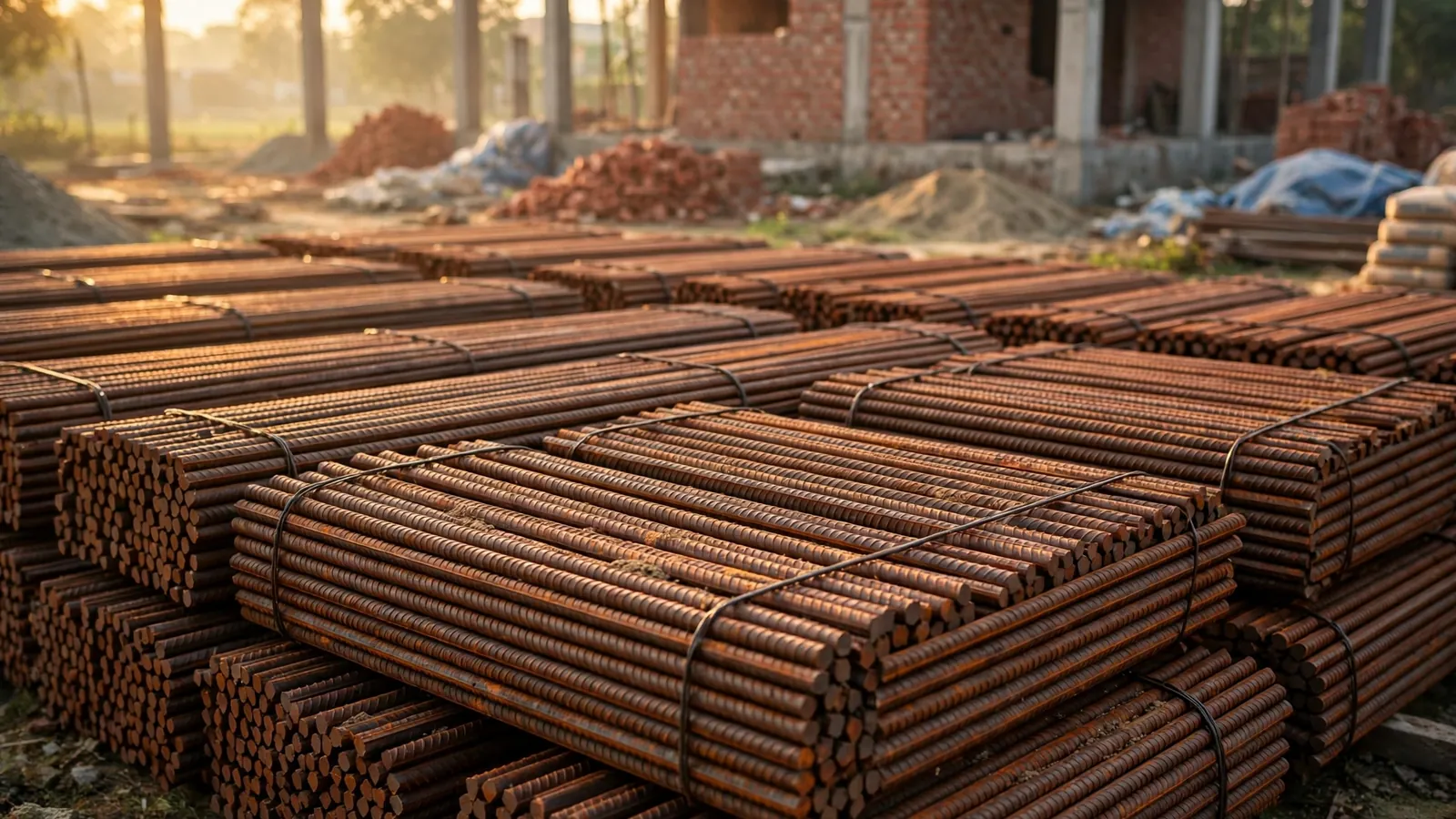
TMT stands for thermo-mechanically treated steel. A hot-rolled bar is quenched — cooled rapidly with water — so its outer surface turns hard while the core stays softer and more ductile. The ribs on every bar grip the concrete so steel and concrete act as one piece; a plain round bar would slip under load, a ribbed TMT bar does not.
All the grades in this article are covered by one Indian standard, IS 1786:2008. The number is the minimum yield strength in megapascals (MPa) — the stress at which the steel starts to stretch permanently. Fe 500 yields at 500 MPa; Fe 550 at 550 MPa. The letter D stands for ductility: a D-grade bar stretches further before it breaks — a bar that bends and warns you is safer than one that snaps. The grade stamped on the bar matters more than the brand on the bundle: the design assumes that yield strength and that ductility, so changing the grade changes the design without telling the engineer.
2. Fe 500 vs Fe 500D vs Fe 550 vs Fe 550D — the real differences
The four grades differ in yield strength, ultimate strength (the stress at which the bar breaks), and elongation (how far it stretches before breaking). Carbon equivalent (CE) is the fourth: a lower CE means less brittleness in high-stress zones like columns and footings.

| Grade | Yield strength | Ultimate strength | Elongation | Carbon equivalent (max) |
|---|---|---|---|---|
| Fe 500 | 500 MPa | ~620 MPa | ~12–14% | 0.55 |
| Fe 500D | 500 MPa | ~620 MPa | 16–20% (min 16%) | 0.45 |
| Fe 550 | 550 MPa | ~680 MPa | ~12–14% | 0.55 |
| Fe 550D | 550 MPa | ~680 MPa | 14.5–16%+ | 0.45 |
Read the table as a trade-off, not a ranking. Fe 550 is stronger — one guide puts it about 33% stronger than Fe 415, against 20% for Fe 500 — but the D grades trade nothing on strength and buy you ductility. In an earthquake, that stretch keeps a frame standing long enough for people to get out; our earthquake-resistant house design guide explains why.
3. Which grade should your house use?
For a normal house, Fe 500D is the usual recommended choice in the guides we reviewed: the 500 MPa strength residential designs are built around, plus the ductility that helps in columns and footings. Fe 550 and Fe 550D suit taller or heavily loaded buildings and seismic zones, only when the structural engineer specifies them.
One guide's rule of thumb: columns and footings at least Fe 500D; lintels and partition walls Fe 415 or Fe 500 on a tight budget. But a rule of thumb is not a specification — your drawing names the grade, and that is the grade to buy. Fe 550D gives more strength per bar, but stronger is only better when the design uses it.
So the buying decision is made before you reach the dealer: read the grade off the drawing, write it on the purchase order, and check the bars against it on delivery. If the dealer offers a "better" grade at the same price, ask the engineer first — it is a design change.
4. Brands — the shortlist, and why the certificate matters more than the name
The brands most Indian sites buy are a short list: Tata Tiscon, JSW Neosteel, SAIL TMT, Jindal Panther, Shyam Steel and Kamdhenu, plus regional players. All claim BIS 1786 certification for Fe 415, Fe 500, Fe 500D and Fe 550D. This is a widely stocked shortlist, not an endorsement — no brand name is a substitute for the checks in Section 6.
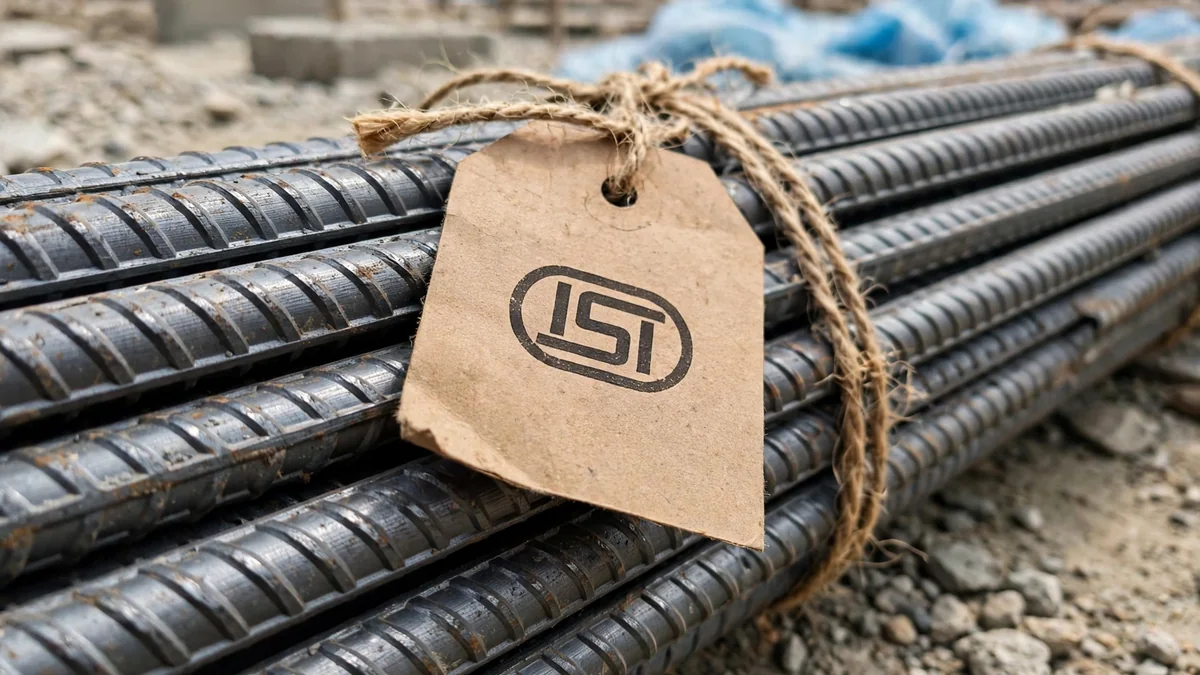
The quality gap between a Tier-1 brand and a regional re-roller, per one guide, is mainly carbon-equivalent control and rib-pattern consistency — what decides whether a bar bends cleanly and grips the concrete evenly. So buy only from an authorised dealer who gives you an ISI-certified bar with a mill test certificate. The brand matters less than the paper trail: ISI mark, licence number, certificate and a weight that matches the standard.
5. Prices — what a tonne costs, and why quotes differ
Steel prices move with the market, city and dealer, so treat every figure here as illustrative — a range from one 2026 guide, checked on 14 November 2026, not a live rate. In that guide, Fe 500D ran roughly Rs 53,500–58,000 per tonne and Fe 550 roughly Rs 55,000–60,000 per tonne. The Fe 500 to Fe 500D gap was 10–12% in one source and 2–4% in another, so get two or three dealer quotes for the same grade and brand on the same day.
Three things explain most of the difference between two quotes. First, brand: Tier-1 brands carry a premium of roughly Rs 4–8 per kg over the baseline in one guide. Second, diameter: thicker bars are usually cheaper per kg. Third, delivery: a quote that includes transport, unloading and GST is not comparable to one that excludes them. Ask every dealer the same questions — grade, diameter, brand — and whether the price includes GST and delivery.
For budgeting, the steel quantity matters more than the per-tonne rate, and that comes from the structural drawing and the BOQ. Our house construction cost guide shows where steel sits in the overall budget.
6. Five site checks before you accept a delivery
These checks take under an hour and need a scale, a measuring tape and the mill test certificate. Run them on the first delivery, and again whenever the supplier or batch changes.
Check 1 — Markings. The brand name should be stamped on the rib face, the grade (for example 500D) rolled onto the bar, and the ISI/BIS mark with licence number on the bundle tag; a rolling mill (RML) number is embossed at intervals. Fakes often have shallow or blurred markings.
Check 2 — Mill test certificate (MTC). Ask the dealer for the MTC as a PDF and match its heat or cast number to the bundle tag, then cross-check the mill code on bis.gov.in. A genuine certificate traces the steel to a specific heat at a specific mill. No certificate, no payment — write that into the purchase order first.
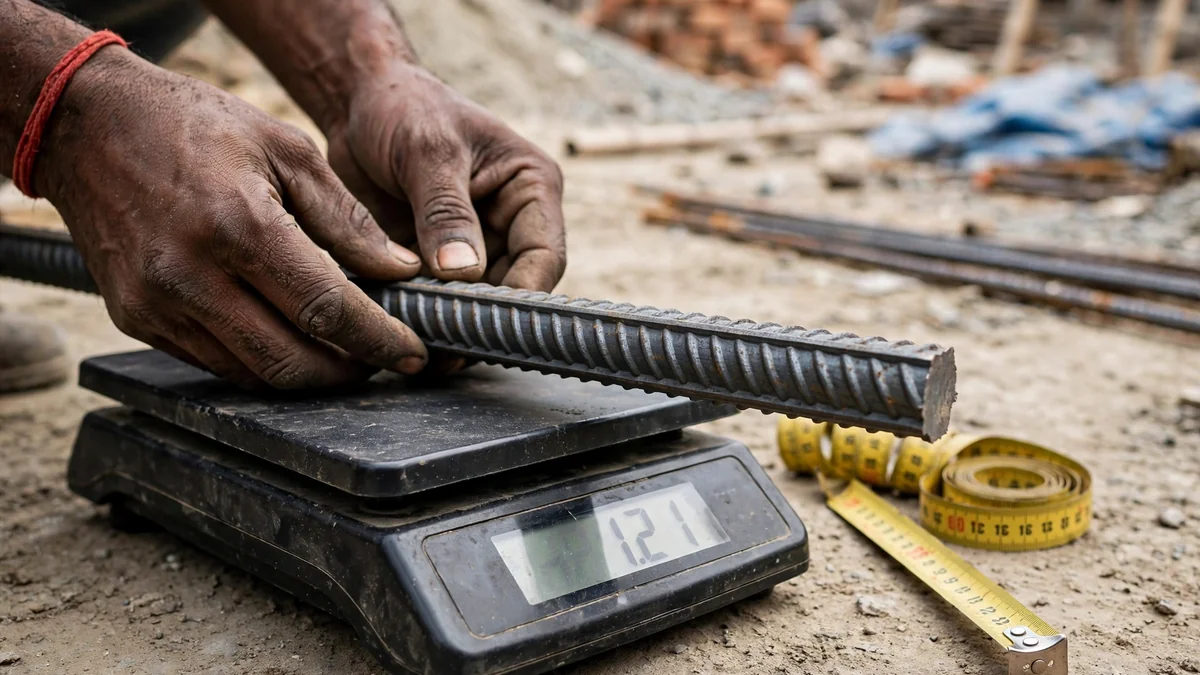
Check 3 — Weight test. Cut a 1-metre length and weigh it against the theoretical weights in the table below: 8 mm = 0.395 kg/m, 12 mm = 0.888 kg/m. A deviation beyond about ±5% is a red flag — you are paying for steel you are not getting.
| Diameter | Weight per metre | Weight per 12 m rod |
|---|---|---|
| 8 mm | 0.395 kg | 4.74 kg |
| 10 mm | 0.617 kg | 7.40 kg |
| 12 mm | 0.888 kg | 10.67 kg |
| 16 mm | 1.58 kg | 18.96 kg |
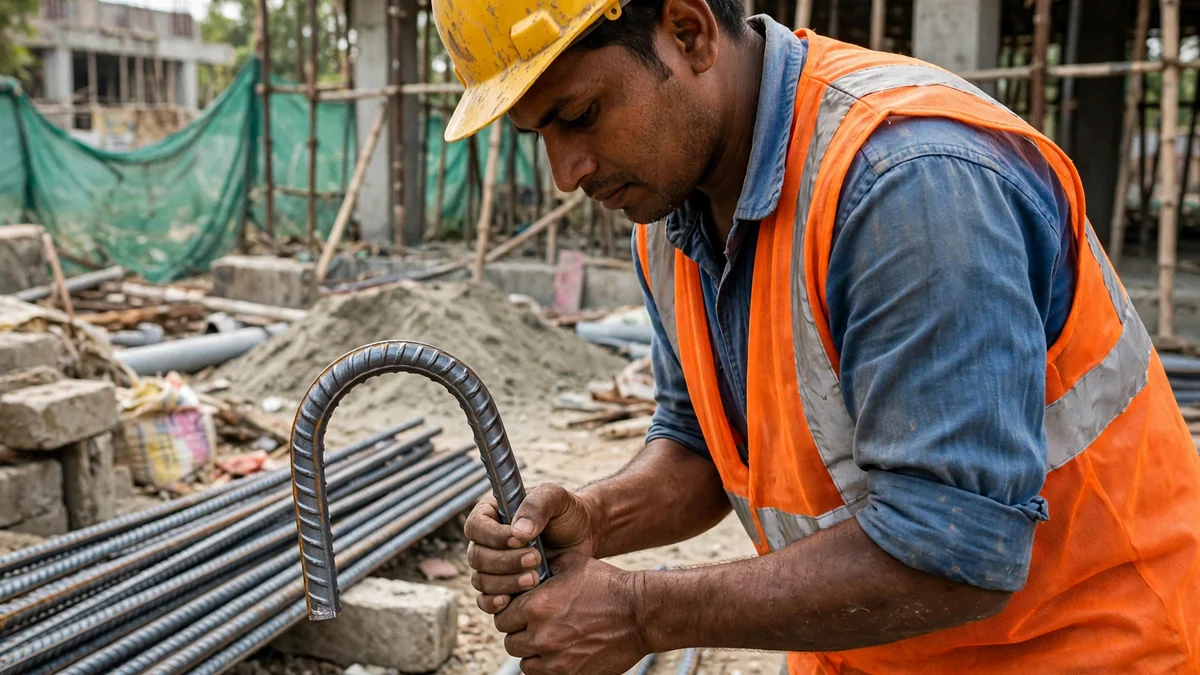
Check 4 — Bend test. Bend a short offcut to about 90 degrees. Fe 500D should bend without cracking or snapping — that is the ductility you are paying for. If it cracks or shows a rough, grainy fracture, it is the wrong grade or poor steel: keep the batch out of the cage.
Check 5 — Surface and ribs. Light brown surface rust is normal; flaking, pitted rust is not — it means the bar has lain in water or mud. The ribs should be uniform and the diameter consistent end to end. A bar visibly thinner at one end has a rolling defect.
Verify the grade, diameter and certificate against the approved drawings before any bar is cut or bent. A bar that fails any check should be set aside and reported to the dealer in writing — do not let it into the cage while the dispute is open.
7. Storage and handling on site
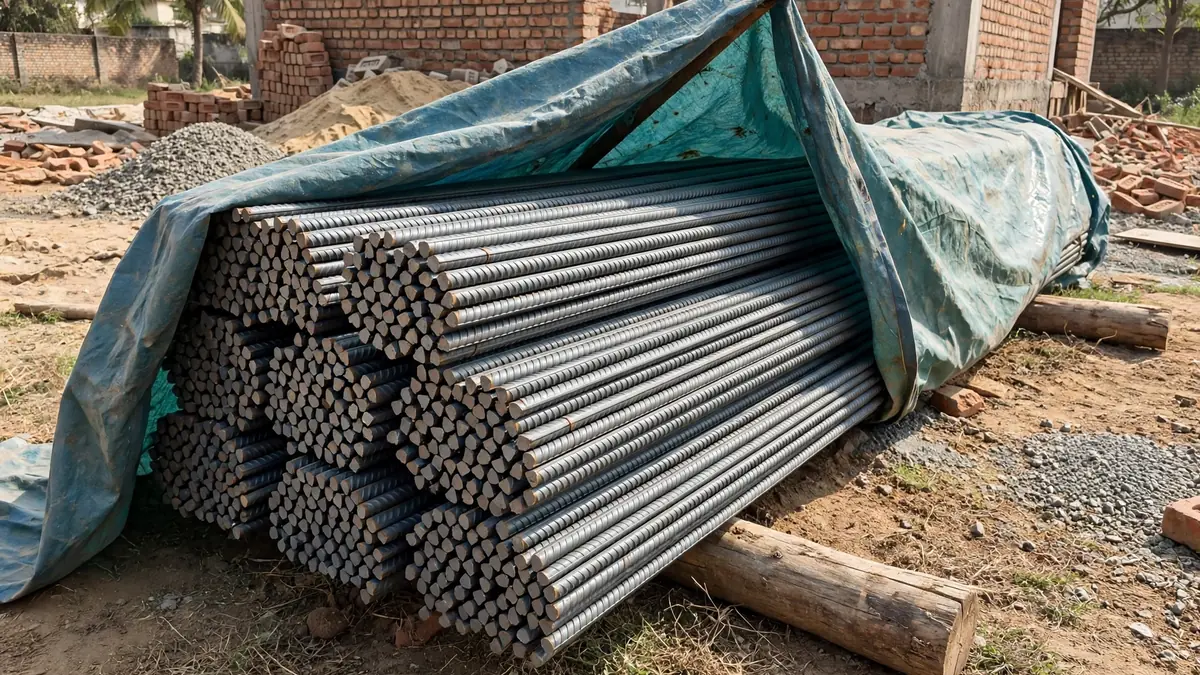
Steel rusts, and surface rust is not the problem — rust that flakes and pits is. Store bars off the ground on wooden or concrete supports, covered from rain with a tarpaulin, and keep diameters and grades in separate, labelled stacks. Fe 500D mixed with Fe 550 looks identical from the outside, and the mix-up is found only when the wrong bar is already tied into a column.
Keep the bundle tags until the steel is consumed — the tag is the only link between the bars and the mill test certificate, and your evidence if a dispute arises. Never weld TMT bars casually — Fe 500D needs proper technique, with pre-heating for larger diameters, and Fe 550 and Fe 600 typically need specialised equipment and skilled welders.
8. Steel inside the frame — where the grade actually works
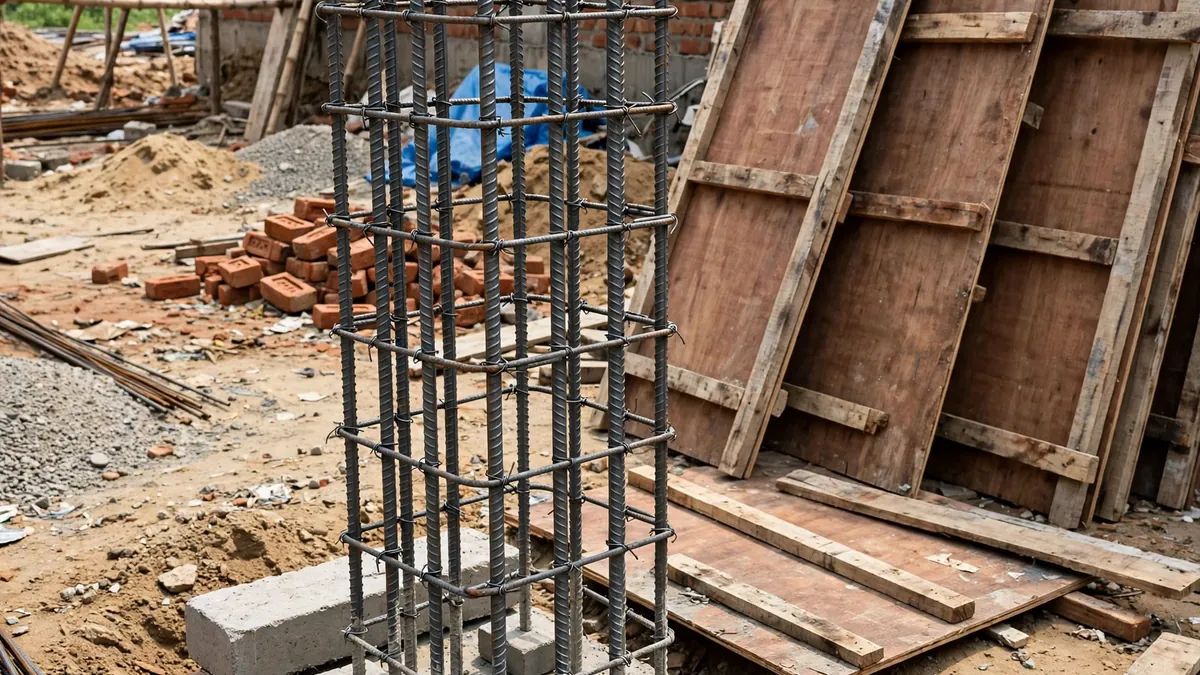
Concrete is strong in compression and weak in tension, so the steel carries the tension. In a column, the vertical bars carry the load and the stirrups hold them in place; in a beam, the bottom bars carry tension at mid-span and the top bars near the supports. The grade decides how much tension each bar can carry, so the engineer sizes the cage around a specific grade — change the grade and the cage is no longer the cage on the drawing.
So the most important site check is not any of the five in Section 6, but the one after them: the cage must match the drawing before concreting. Count the bars, check diameters against the schedule, and check stirrup spacing — tighter near the column-beam joint, where earthquake forces concentrate. Our RCC slab casting checklist covers the same discipline for slabs.
9. Mistakes homeowners make — and your pre-order checklist
Buying on price alone. A quote for "TMT steel" with no grade, diameter or brand named is not a quote — it is an invitation to receive whatever the dealer has. Accepting a "better" grade on site. A dealer substituting Fe 550 for Fe 500D has changed your design; the engineer decides, not the truck. Skipping the weight test. Light bars are the most common short-count in house construction — invisible once the concrete is poured.
Keep this list with the purchase order: 1. Grade, diameter and quantity copied from the structural drawing — Fe 500D unless the drawing says otherwise. 2. Authorised dealer, ISI-certified bars, mill test certificate with matching heat number. 3. Price confirmed with GST and delivery, in writing. 4. On delivery: markings checked, certificate matched, 1 m weight test, bend test, surface checked. 5. Bars stored off the ground, covered, labelled by grade and diameter, tags kept; cage checked against the drawing before concreting.
Steel is a small share of what a house costs and the whole of what holds it up. Spend the hour on the five checks, buy the grade on the drawing, and keep the certificate. If you are planning a house, talk to RTPL Constructions & Engineering before you order.
Last reviewed: 15 November 2026. Grade figures come from guides citing IS 1786:2008 (web search, 14 Nov 2026). Prices are illustrative ranges from one 2026 guide — confirm current rates locally. Final sizing, reinforcement and grade decisions need project-specific assessment by a qualified structural engineer.