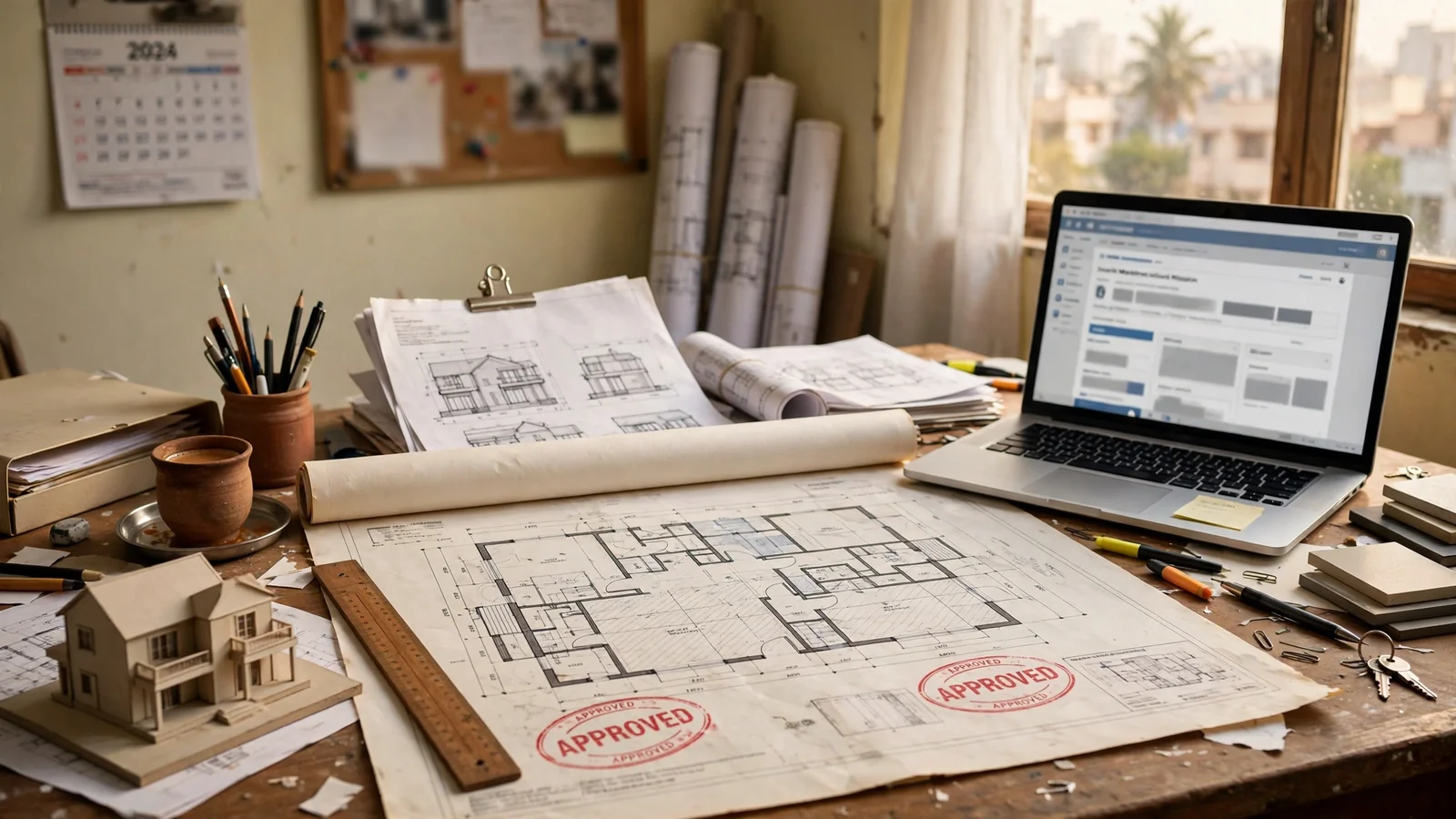
Before 2017, buying an under-construction flat in India meant trusting the builder's brochure. Possession dates slipped by years, the flat you paid for was smaller than the flat you were promised, and your money could be diverted to the builder's next project. The Real Estate (Regulation and Development) Act, 2016 — RERA — changed those rules. It gives you the right to check the project before you pay, your money back with interest if possession is delayed, and a fast forum to complain in.
1. What RERA is, in plain language
RERA is a central law in force since 1 May 2017. It does not build houses — it sets the rules for selling them. Before RERA, a builder could advertise with no approved plan, collect buyers' money, and spend it anywhere. Now, a builder selling flats in a qualifying project must first register it, disclose the real facts, and follow the rules on pricing, money and possession dates.
Each state runs its own authority and portal — MahaRERA, UP RERA, K-RERA, and two in Haryana, for Gurugram and Panchkula. The law is central, but enforcement and the portal are the state's. So the first habit in this guide matters: check the project on your own state's .gov.in portal, never through a link a salesperson sends you.
This article is general information, not legal advice. Rules differ by state — verify the project on your state RERA portal and consult a property lawyer before you pay or sign.
2. Which projects must register: the 500 sq m / 8-apartment rule
Not every project falls under RERA. A project must register before it can be advertised, marketed or sold if the land is larger than 500 square metres, or if it has more than 8 apartments across all phases. Selling or advertising an unregistered project above that threshold is illegal.
Almost any city apartment project is above it. If a salesperson tells you a 200-flat project "does not need RERA", that is a warning sign — ask for the registration number and check it yourself.
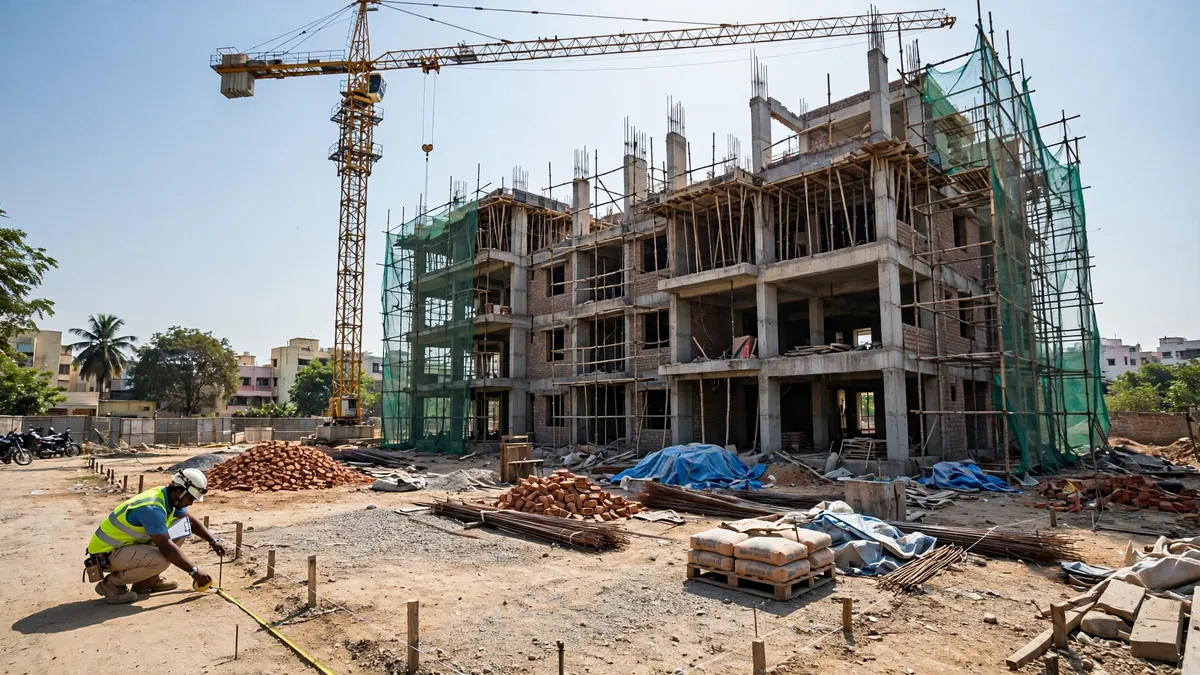
Registration is not a one-time stamp: the promoter must keep it live until completion and the occupancy certificate, file quarterly updates, and disclose any extension of the completion date. A lapsed registration, or a date that has quietly moved by two years, tells you more than any brochure. Agents must register too — check the broker's number on the same portal.
3. The five protections that actually matter
Five rights do the real work.
First, the 70% escrow rule. Seventy percent of buyers' money must go into a separate account for that project alone, usable only for its construction and land costs. The builder cannot spend your Tower A payment on land for Tower B, and withdrawals are certified against actual progress.
Second, carpet-area pricing. Builders must sell on carpet area — net usable floor area, including internal partition walls, excluding external walls, service shafts, balconies and open terraces. For years buyers were quoted a "super built-up area" that folded in lobbies and staircases, so a 1,000 sq ft flat on paper could be 700 sq ft inside. Read the area schedule, not the brochure.
Third, the 10% advance cap. A developer cannot take more than 10% as advance until a written agreement for sale is signed and registered. A demand for 20% or 30% "to block the flat" before any agreement exists breaks the rule. Pay only after the agreement is in place, by a traceable channel — never in cash.
Fourth, a binding possession date. The agreement must state a possession date. Miss it, and you can take a full refund with interest, or keep the flat and collect interest for every month of delay. Guides quote roughly 9–10% a year; the exact rate is fixed by the state authority's orders.
Fifth, five years of defect liability. After possession, the builder must fix structural defects free for five years — a cracked beam, a leaking slab joint, a wall not built to the drawings. Report it in writing with photographs and dates; the repair is the builder's cost.

| Protection | What it means for you | What to check |
|---|---|---|
| 70% escrow account | Money stays inside your own project | Escrow details on the portal |
| Carpet-area pricing | Pay for usable area, not super built-up | Area schedule in the agreement |
| 10% advance cap | No large payment before a signed, registered agreement | Payment schedule; receipts for every payment |
| Binding possession date | Refund with interest, or interest per month | Agreement vs portal date |
| 5-year defect liability | Defects fixed free for five years | Written report, photos, dates |
All five depend on the agreement and the portal record — a protection that exists only in a sales pitch is worth nothing. Read our construction contract guide before you sign, and our building plan approval guide for the approvals the portal should show.
4. How to check a project in 10 minutes
The most useful ten minutes in a flat purchase — and it costs nothing. Do it before you pay a rupee, and again before you sign.
Step 1 — open the right portal. Find your state's RERA authority — UP RERA for Uttar Pradesh, MahaRERA for Maharashtra — and open the .gov.in portal directly. Never use a link a salesperson sends or a screenshot the builder shows you.
Step 2 — search the project. Enter the RERA number from the brochure or hoarding, or search by project and promoter name. If the builder's number finds nothing, stop and ask why — a wrong number is itself an answer.
Step 3 — check the registration itself. Is it active, lapsed or extended? Does the declared completion date match the sales team's promise? If they promised December and the portal says two years later, believe the portal.
Step 4 — read the uploaded documents. The portal should carry the sanctioned plan, land title and environmental clearance where applicable. Compare it with the brochure — floors, towers and layout should match. Missing documents are not a paperwork delay; they are the reason the project may not be what it claims to be.
Step 5 — read the quarterly updates, then the complaints. Developers must report progress every quarter; thin updates, missing quarters or photographs that never change are warning signs. A project 40% complete a year ago and still 40% complete has a problem the brochure will not mention. Then read the complaints and orders against the project and promoter — a string of delay orders against earlier projects tells you how yours is likely to go.

Write down what you find — registration number, declared date, carpet area, possession date — and keep it with the agreement. If the project is not on the portal at all, do not accept "registration is in process" for a project already being sold.
5. Red flags on the portal — and in the sales office
These findings should make you pause, ask hard questions, or walk away.
- Lapsed or repeatedly extended registration. One extension can have a reason; repeated extensions with no progress usually mean the project is stuck.
- Declared date vs promised date. If the portal says 2028 and the salesperson promises 2026, the date is not one the builder has committed to on record.
- Complaints and unpaid orders. Was the promoter ordered to refund buyers, and were those orders honoured? An unpaid order is a louder signal than a fresh complaint.
- Pressure to pay before the agreement. Any demand above 10% before a signed, registered agreement breaks the rule. "The price will go up tomorrow" is a sales tactic.
- Cash payments or payments to a personal account. Every payment should go to the project's account by a traceable channel, with a receipt naming the project and flat. Cash leaves no trail.

One flag may have an explanation — ask for it in writing and check it against the portal. Two or three together are a pattern: walk away, or get a property lawyer to look at the file first.
6. Filing a complaint: what it costs and how long it takes
If the builder has delayed possession, refused a refund, or broken the agreement, you do not have to start in a civil court. File a complaint with your state RERA authority, on its portal. The fee is usually ₹1,000 to ₹5,000 — illustrative, and it varies by state — and the authority is meant to resolve it within 60 days. Its orders are legally binding, like a court's.
Before you file, gather the file that makes your complaint provable: the agreement with the possession date, every receipt, the RERA number, portal screenshots of the declared date and updates, and every written message from the builder — emails and letters, not phone calls you cannot prove. State clearly what you want: refund with interest, or possession with interest for the delay.
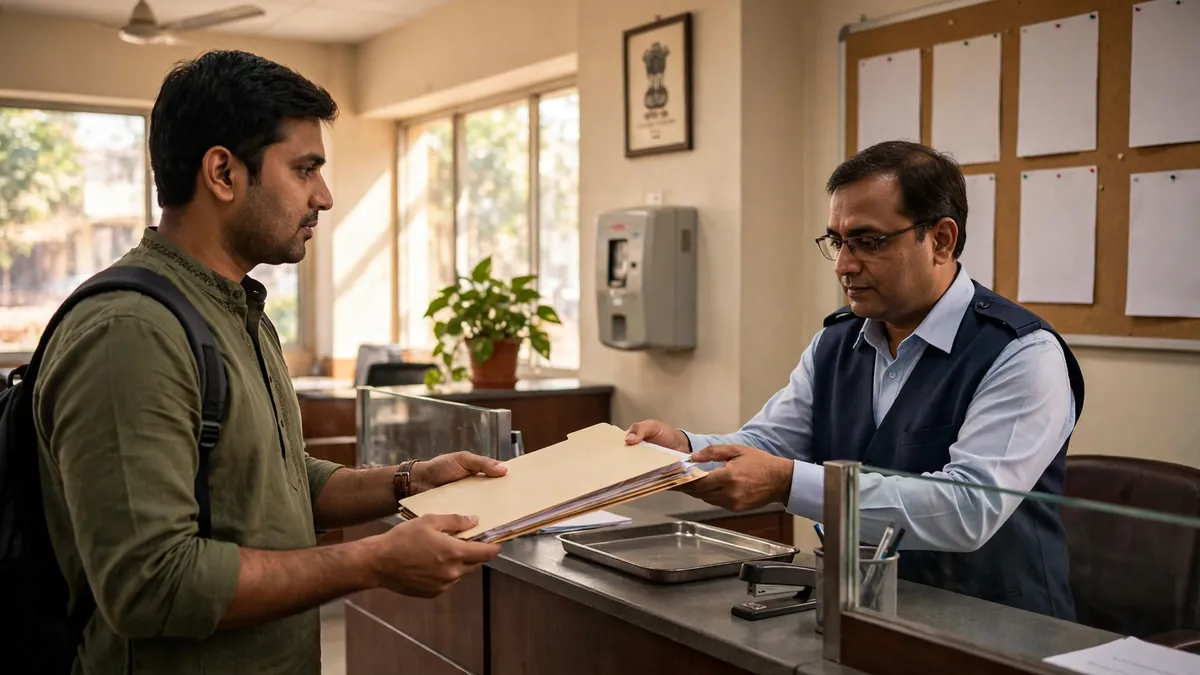
If either side disagrees, the appeal goes to the Real Estate Appellate Tribunal. Keep every document from the day you first enquire — the brochure, receipts, agreement and screenshots together turn a complaint into an order.
7. What RERA does NOT cover
Resale homes are not covered. Buying a completed flat from its owner? RERA does not apply — it covers projects sold by promoters, not second sales. Your protection is the title check, the society's records and a physical inspection, not the portal.
Small projects are not covered. Projects below the threshold do not have to register. That does not make them unsafe, but you cannot rely on the portal or the escrow rule — so the agreement and a lawyer's review matter even more.
Rentals are not covered. Tenancy is governed by separate tenancy laws, not RERA.
Registration does not guarantee delivery. Registration confirms the promoter disclosed the required information and followed the process. It is not a promise the project will finish. A registered project can still stall.
RERA does not vet construction quality. The authority sends no engineer to check the concrete, the steel or the waterproofing. Quality is checked the way it always was: by the structural drawings, the site supervision and your own inspection at handover — run our new house handover checklist before you take the keys.
RERA does not replace title verification. A project can be RERA-registered while a title dispute exists over the land. Get an encumbrance certificate and an advocate's title check before you pay — registration and clean title are two different things.

8. Before you pay a rupee: the 10-minute checklist
- Registration: the project is on your state RERA portal, active, with a number that matches the brochure.
- Dates: the portal's declared date matches the promised possession date and the agreement date.
- Area: the carpet area in the agreement is the area you are paying for.
- Money: no more than 10% before a signed, registered agreement; every payment traceable, with receipts.
- Documents: sanctioned plan, land title and clearances on the portal; quarterly updates show real progress.
- Title: encumbrance certificate and advocate title check done, even for a registered project.
- Budget: the full cost is written down — price, stamp duty, registration, GST and extras. Our hidden costs guide and house construction cost guide show how to build that budget, and our BOQ guide shows how to read an estimate line by line.
RERA gave homebuyers something new: the right to see the facts before they pay. The portal is free, the check takes ten minutes, and doing it before every payment is the cheapest insurance in a flat purchase. Check the project, read the agreement, keep every receipt. Buying in Uttar Pradesh or Delhi NCR? Ask RTPL Constructions for a second pair of eyes on the drawings, the agreement or the handover — the check is free, the flat is not.