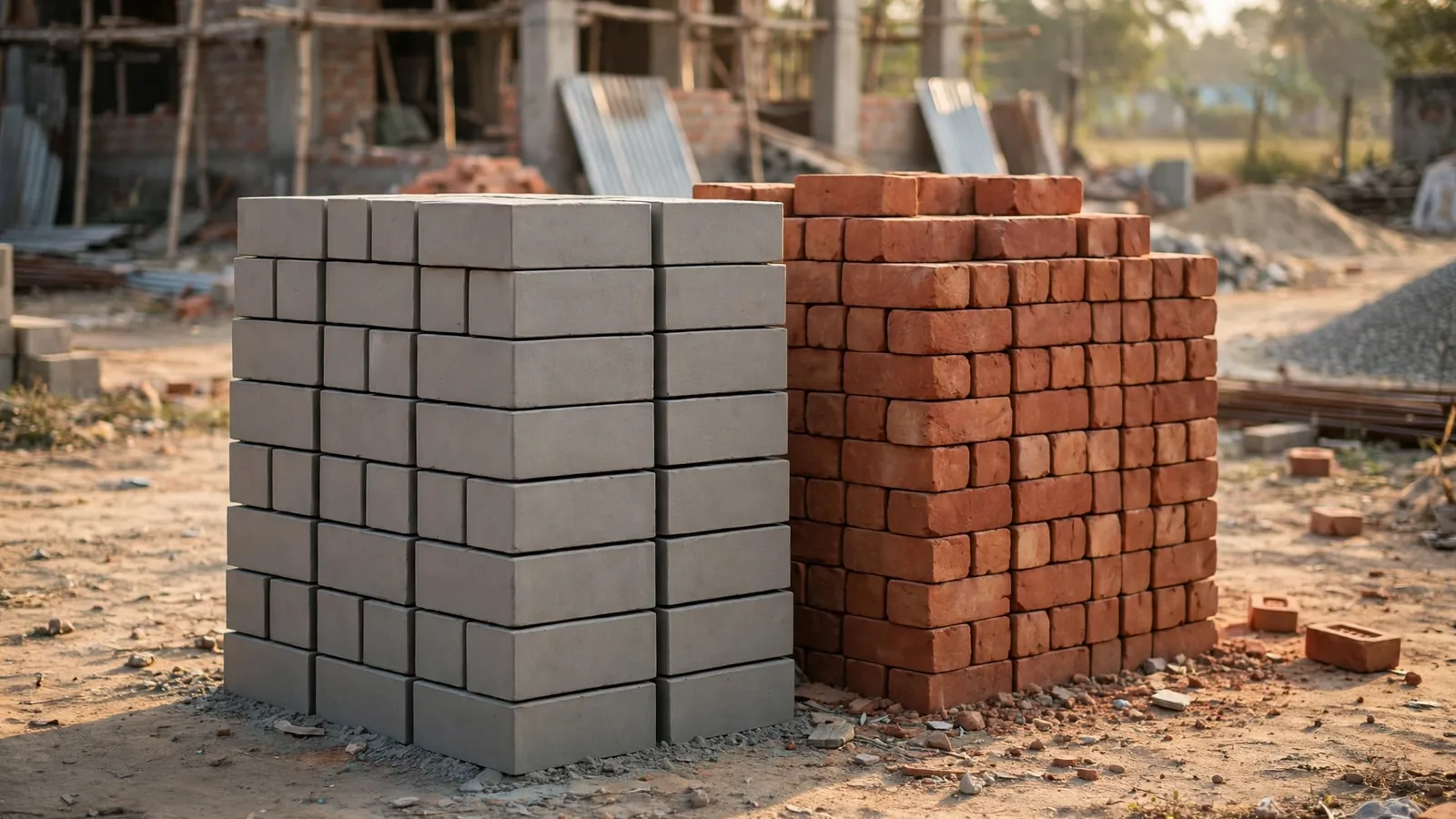
Walk into any brick yard in India and you will see two piles: the red clay bricks your father built with, and the smooth grey blocks that have quietly taken over much of the market. The grey ones are fly ash bricks. Good fly ash bricks win on strength, uniformity and cost per finished wall — but "good" does a lot of work in that sentence, and red bricks still win in a few specific situations.
1. The short answer
If you are building a new RCC-frame house — where columns and beams carry the load and bricks only fill the walls — buy factory-made fly ash bricks of a specified class, class 7.5 or class 10. They are stronger than the average kiln red brick, they come out of the factory at a uniform size, they absorb less water, and the finished wall usually costs the same or less once mortar, plaster and breakage are counted. Buy red bricks for a small repair that must match existing red brickwork, for an exposed red brick finish, or if no reliable fly ash supplier exists near your site. For load-bearing walls, only the class your structural engineer approves.
2. What each brick actually is
A red brick is burnt clay. Clay — usually fertile topsoil — is moulded, dried in the sun and fired in a kiln. The process is thousands of years old, and it is also why red brick quality varies so much: the clay, the moulding, the drying and the firing all depend on the kiln and the season. A good kiln produces a hard first-class brick; a poor kiln produces under-burnt bricks that crumble and over-burnt bricks that warp.
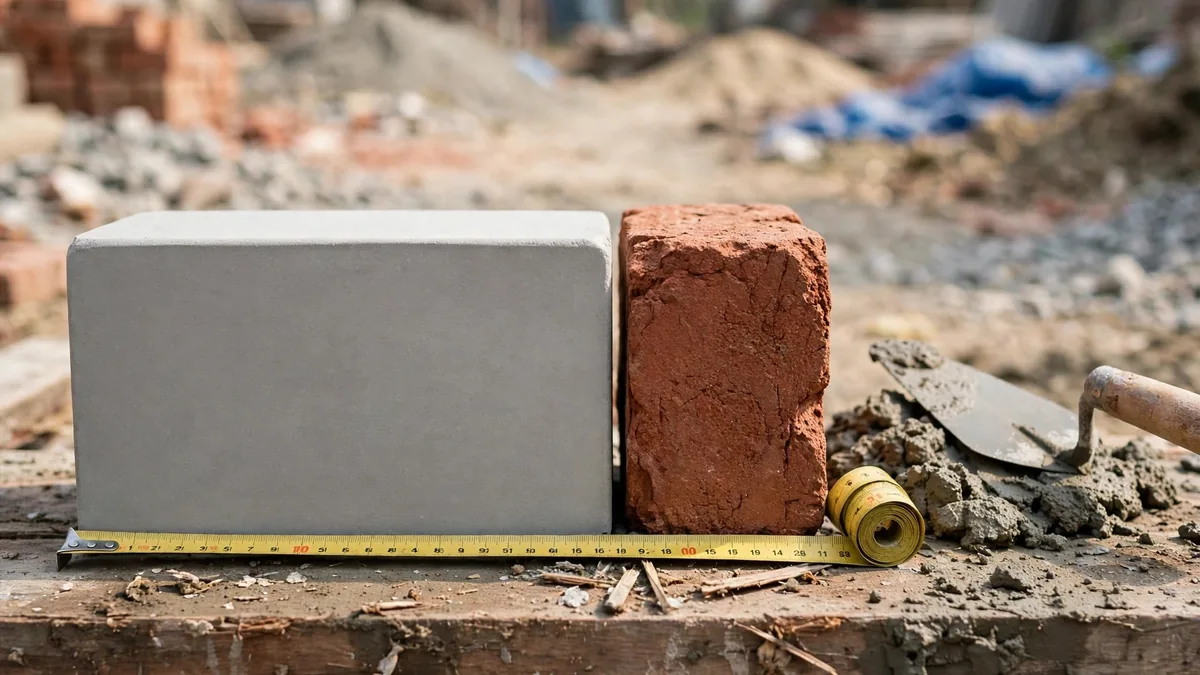
A fly ash brick is a factory product. Fly ash — the fine powder left over when coal is burnt in a thermal power plant — is mixed with lime or cement, sand and water, pressed into moulds under high pressure and cured, usually with steam. No topsoil is dug and nothing is fired in a kiln. Because the mix and pressure are controlled, the bricks come out at a near-identical size and a known strength class. Both bricks are the same nominal size in India, 230 × 110 × 75 mm — the difference is how close each brick in the load comes to that size.
3. Side by side: the numbers that matter
Every figure below is a range from November 2026 web sources; where sources disagree, the table says so.
| Property | Fly ash brick | Red clay brick |
|---|---|---|
| Standard | IS 12894:2002 (fly ash–lime bricks) | IS 1077:1992 (common burnt clay bricks) |
| Compressive strength | Commonly class 7.5–10 N/mm²; up to 20 premium | Common kiln bricks 3.5–7 N/mm²; first-class ~100 kg/cm² (~10 N/mm²) |
| Water absorption | 10–18% (some say 6–12%); IS limit 20% | 15–25%; IS limit 20% for lower classes |
| Size | 230 × 110 × 75 mm, near-identical brick to brick | 230 × 110 × 75 mm nominal, varies by kiln and batch |
| Weight | About 2.5–3.2 kg per brick | About 3.5–4 kg per brick |
| Price per piece (illustrative, Nov 2026) | ₹5.50–₹9 (Delhi NCR ₹6.50–8.50) | ₹6–₹12 (some estimates ₹8–14) |
| Mortar and plaster | Thinner joints; plaster 10–12 mm; 5–10% less mortar | Thicker joints; plaster 12–15 mm |
| Total walling cost per sq ft | About ₹50–70 (material, labour, plaster) | About ₹55–75 (material, labour, plaster) |
| Availability | Region-dependent; best near thermal plants and cities | Available almost everywhere in India |
| Environment | Reuses industrial waste; no topsoil, no kiln firing | Consumes fertile topsoil and coal in kilns |
4. Strength: what the numbers actually mean
Fly ash bricks follow IS 12894:2002, and the class system is unusually honest: the class number is the minimum average compressive strength in N/mm². A class 10 brick averages at least 10 N/mm² across five tested bricks, and no single brick may fall more than 20% below it. Classes run from 3.5 up to 30, but the bricks stocked for houses are class 7.5 and class 10. Specify the class in writing — a quotation that names no class is quoting whatever the plant is making that week.
Red bricks follow IS 1077:1992, with classes in kg/cm² — 35, 50, 75, 100 and upwards. A first-class red brick is roughly 100 kg/cm², about 10 N/mm², so a good first-class red brick and a class 10 fly ash brick are, on paper, about equal. The catch is that most red bricks sold in India are not first-class: common kiln bricks typically test at 3.5–7 N/mm², and strength varies from batch to batch because firing is uneven. That is why two sources can both be right — one says fly ash bricks are twice as strong, another says first-class red bricks are slightly stronger.
The practical conclusion is about consistency. With fly ash bricks you can ask for a class and a test report; with red bricks you are trusting the kiln. In an RCC-frame house the bricks are infill, so the strength difference rarely decides the house's safety — the frame carries the load. What it decides is how the wall behaves over years: weaker, more porous bricks crack more, absorb more water and need more plaster. Our guide to AAC blocks vs red bricks compares a third option.
5. Cost: per brick is the wrong comparison
Indicative November 2026 web ranges, before GST and delivery: fly ash bricks roughly ₹5.50–₹9 per piece — Delhi NCR ₹6.50–₹8.50, tier-2 cities ₹5.50–₹7.50 — and red bricks roughly ₹6–₹12 per piece, with some editorial estimates going to ₹8–₹14. Bulk orders of 10,000 bricks or more usually get a 10–15% discount on either type.
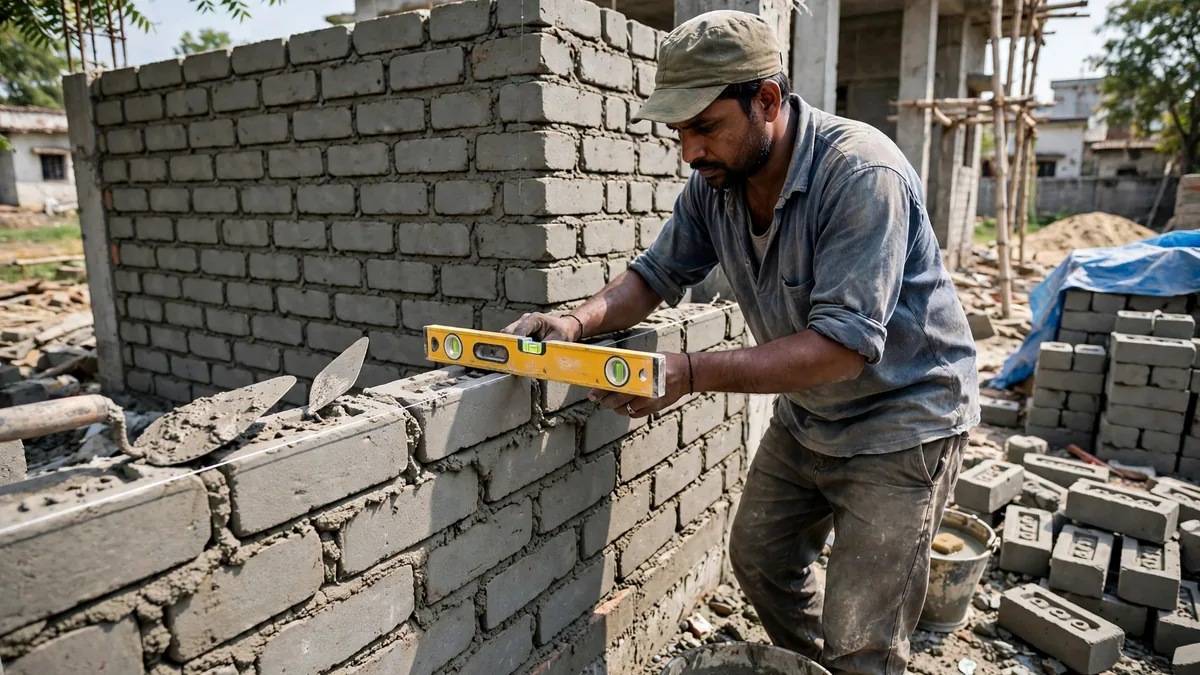
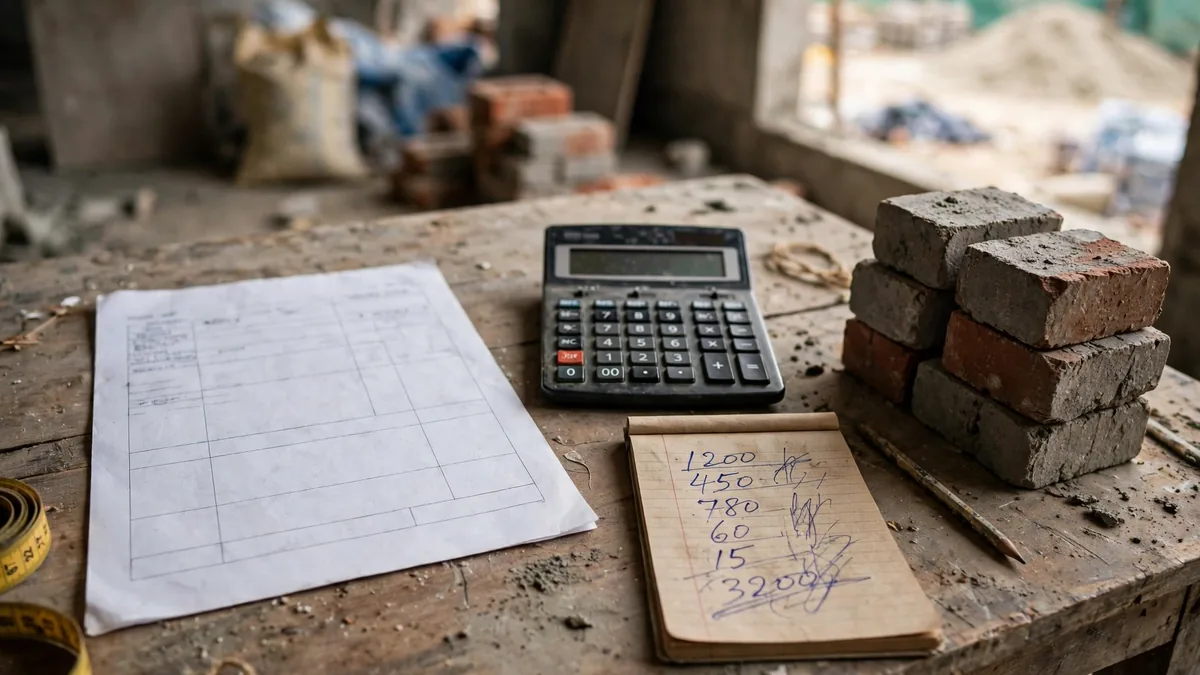
The per-brick price is not the cost that matters. A house needs bricks, mortar, plaster, labour and transport, and fly ash bricks change three of those. Because they are uniform, the mortar joints are thinner — sources put the mortar saving at 5–10%. Because the wall comes out flatter, plaster can be 10–12 mm instead of the 12–15 mm a rougher red brick wall needs. And fewer bricks break in transport and on site. Put together, 2026 guides put the total walling cost at about ₹50–70 per sq ft for fly ash bricks against about ₹55–75 per sq ft for red bricks, including material, labour and plaster. The ranges overlap, but on a whole house, fly ash usually ends up the same or cheaper.
Take a 1,500 sq ft house needing roughly 15,000 bricks — a thumb rule from a Jaipur guide; the real number depends on your plan. At the midpoints of the November 2026 ranges, the bricks alone cost about ₹1.13 lakh for fly ash (15,000 × ₹7.50) against about ₹1.35 lakh for red (15,000 × ₹9): a gap of roughly ₹22,000 before the mortar and plaster savings. If your local red brick rate is at the low end and fly ash has to travel far, the gap can shrink or reverse — so get three delivered quotes for the same quantity, on the same day, and compare the totals, not the per-brick rate.
6. Water, dampness and plaster
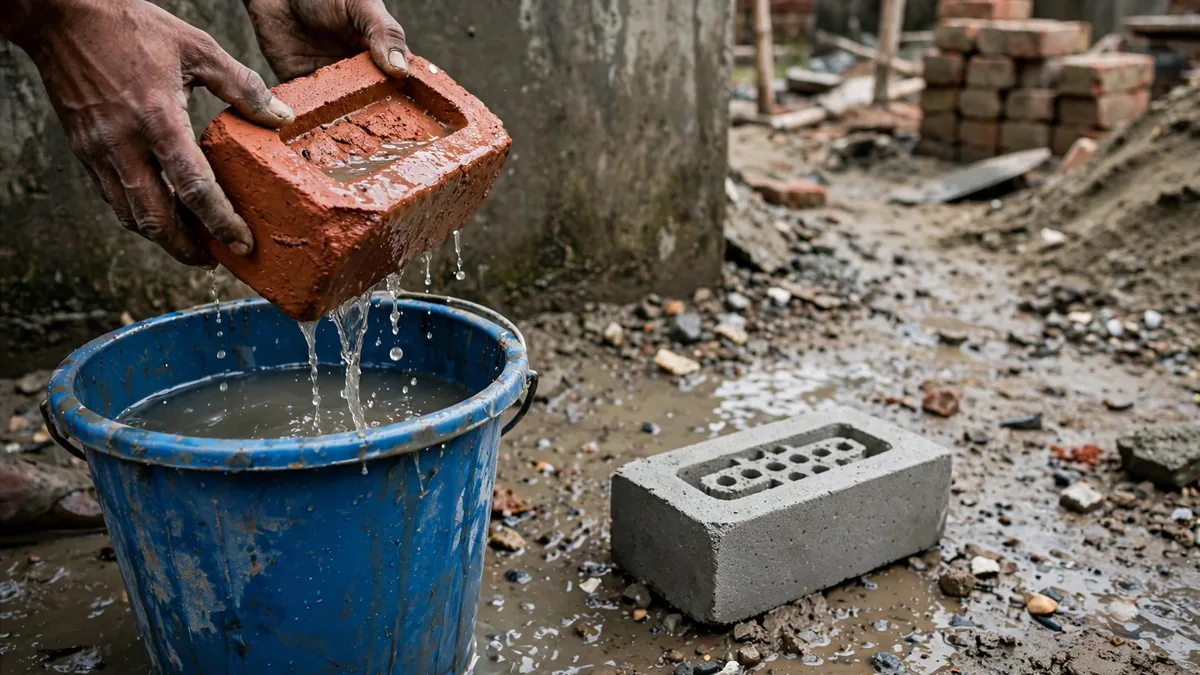
Water absorption is the quiet reason fly ash walls stay drier. A brick that soaks up water passes dampness into the wall — peeling paint, salt patches, plaster coming off in sheets. The IS limit for both brick types is 20% water absorption by mass for the lower classes, but typical fly ash bricks test at 10–18% — some sources report 6–12% — while typical red bricks test at 15–25%. A red brick at the top of that range drinks a quarter of its own weight in water every time it rains.
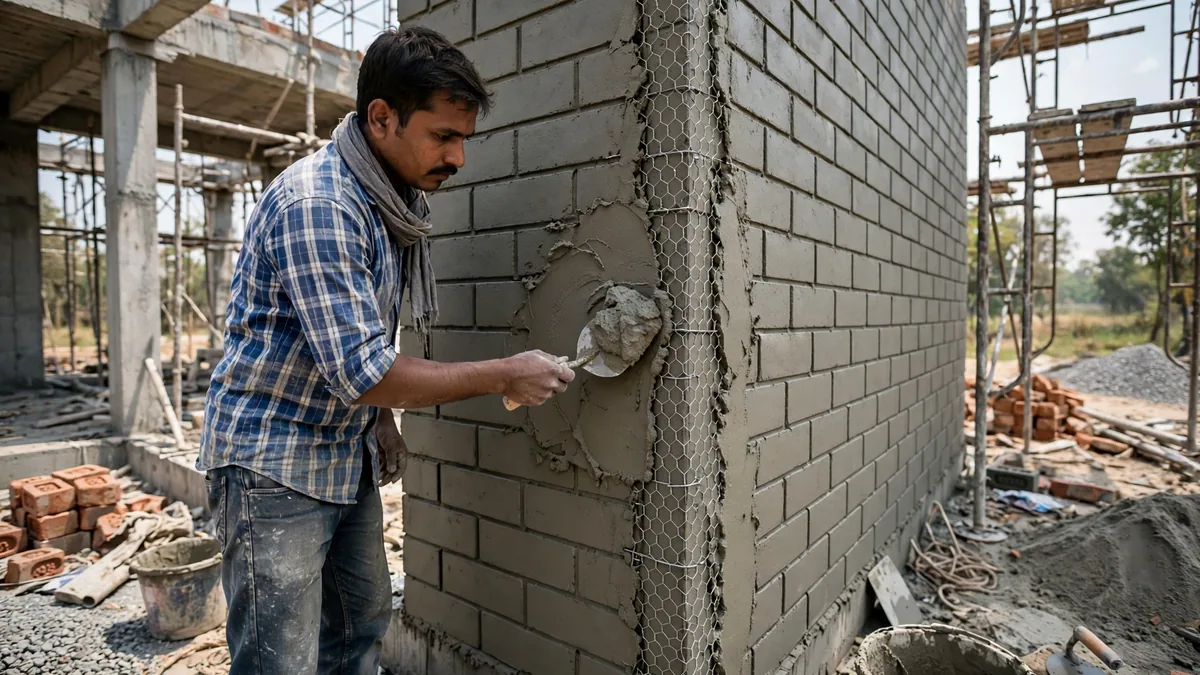
Plaster is where fly ash bricks have one genuine weakness. The same smooth surface that makes the wall flat also gives plaster less to grip. On a rough red brick wall, plaster keys into the surface naturally. On a fly ash wall, the plaster needs help: proper surface preparation, and chicken mesh at every joint where the brick wall meets a column or a beam — the places where different materials move differently and cracks start. Done properly, the thinner plaster is a real saving; done carelessly, it debonds in patches and the saving disappears into repair work.
7. When to choose which
It is about your house, your site and your contractor.
Choose fly ash bricks when: you are building a new RCC-frame house and the bricks are infill walls; a reliable factory or dealer near your site can supply a specified class with a test report; you want flatter walls and thinner plaster; or you are building at a scale where the mortar and plaster savings add up — a full house, not a single room.
Choose red bricks when: you are repairing or extending an existing red brick house and the new work must match the old; you want an exposed red brick finish, which fly ash bricks cannot give you; no dependable fly ash supplier exists near your site; or your mason has never laid fly ash bricks and you cannot supervise the plastering closely.
Either way, ask your structural engineer about load-bearing walls. Fly ash bricks of a specified class are used for load-bearing walls in low-rise houses, and some guides describe them as suitable up to ground plus three floors. That is not a blanket approval: capacity depends on wall thickness, height, loads and foundation, so the engineer must approve the brick class and wall design.
Final member sizing, wall thickness, load-bearing capacity and foundation selection require project-specific assessment by a qualified structural engineer. A brick's class tells you its strength in a laboratory test; it does not tell you whether your wall, at your height, on your soil, can carry your house. Get the brick class and the wall design approved in writing before ordering.
8. Site checks before you buy
Bricks are bought in thousands, and a bad batch is discovered only after the walls are up. Spend half an hour at the yard before you pay.
1. Ask for the class and the test report. For fly ash bricks, ask which class the batch is — 7.5 or 10 for a house — and ask for the batch test report or BIS certification. For red bricks, ask the kiln's class and whether a test report exists. A supplier who cannot name a class is selling you whatever came out that week.
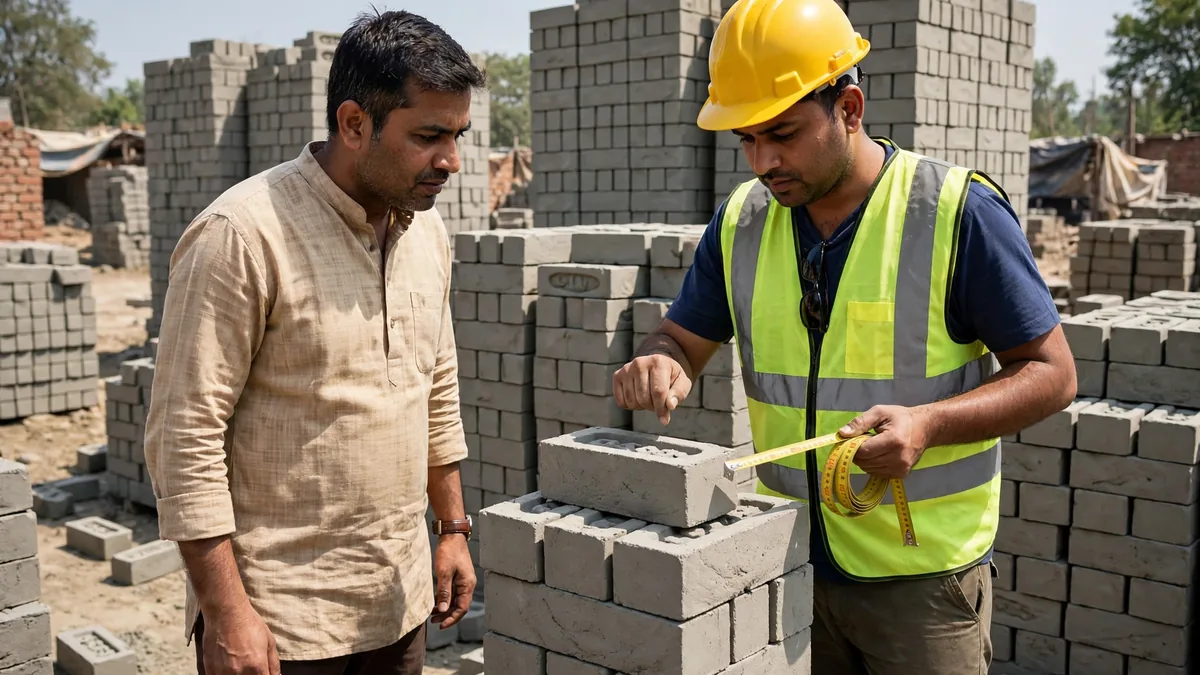
2. Measure ten bricks, then drop one and listen. Take a tape and measure ten bricks from different parts of the stack. Fly ash bricks should be within a couple of millimetres of 230 × 110 × 75 mm; if red bricks vary by more than about 5 mm in length, the joints will be uneven and the plaster thicker. Tap two together: a clear ring is good, a dull thud means under-burning or cracks.
3. Check for salt, cracks and water absorption. Look for white powdery patches (efflorescence) — soluble salts that will reappear on your wall — and for cracks, warping and lumps. For a sample, weigh a dry brick, soak it for 24 hours and weigh it again: the weight gain over the dry weight is the water absorption. Under 20% is the IS limit; under 15% is what you want for an external wall in a wet climate.
4. Check the whole load, not just the top layer. Bad bricks are often hidden under a neat top layer. When the truck arrives, check bricks from the middle and bottom of the load, reject broken and under-burnt pieces on the spot, and count the delivery against the invoice — short delivery is caught only at the gate.
9. Using fly ash bricks correctly on site
Fly ash bricks are not difficult to use, but a mason who treats them exactly like red bricks will get a worse wall. Four habits make the difference: Wet before laying, but do not soak: fly ash bricks absorb less than red bricks, so a light wetting is enough — the point is that the brick should not pull water out of the fresh mortar. Keep the joints thin and even, usually about 10 mm, using a string line on every course and a spirit level every few courses. Fix chicken mesh at every junction where a brick wall meets an RCC column or beam, before plastering — this one step prevents most of the plaster cracking people blame on fly ash bricks. Cure the masonry and the plaster for a week each; in Indian summers that means watering in the morning and evening. Our guides to M sand vs river sand and cement grades in India cover the mortar side of the same wall.
The decision in one paragraph
For a new RCC-frame house in India, order class 7.5 or class 10 fly ash bricks from a supplier who names the class and shows you a test report, get three delivered quotes and compare the finished wall cost — not the per-brick price — and make sure your mason knows the plastering steps: light wetting, thin even joints, chicken mesh at every junction, and a week of curing. Keep red bricks for repairs, for matching old work and for exposed finishes. Get the brick class and wall design approved by your structural engineer before the first truck arrives — because the most expensive brick is the one you have to replace after the wall is built.
Planning a house and weighing up the materials? Talk to RTPL Constructions & Engineering — we help homeowners across Delhi NCR and Uttar Pradesh plan, cost and build homes with clear specifications, verified quantities and no surprises on site.