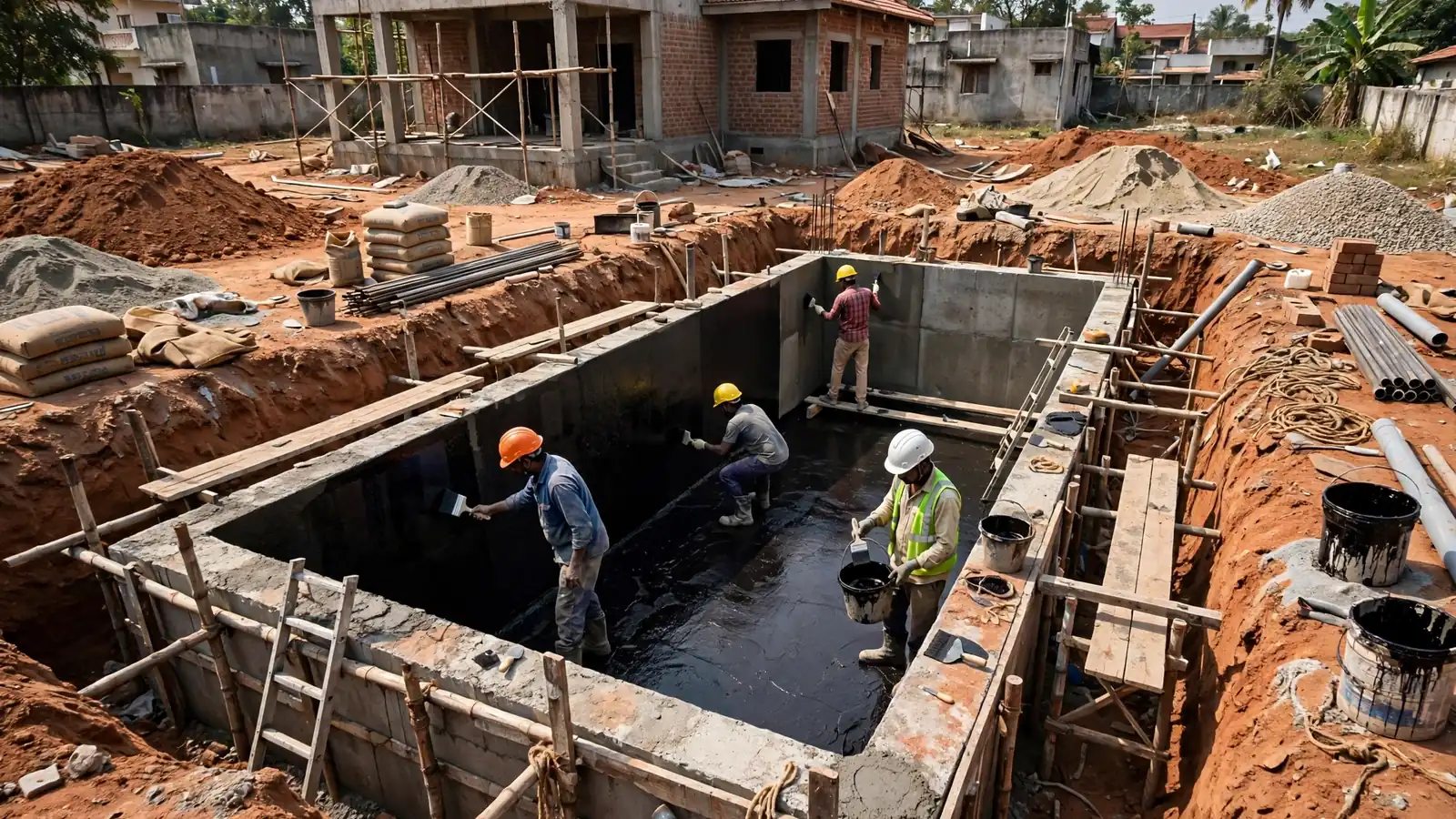
Most construction disputes are not about bad work. They are about a contract that let the money run ahead of the work: the house is still at lintel level, 80% of the price is already paid, and the contract has no clause tying payment to certified progress, no retention money and no penalty for delay.
A construction contract decides three things: what gets built, when you pay for it, and what happens when something goes wrong. This guide explains what a construction contract in India must fix, how a payment schedule should be built, what RERA actually protects, and which clauses to strike. It is general information, not legal advice — have a lawyer read your contract before you sign it.
1. Why the contract matters more than the quote
A quote tells you a price. A contract tells you what that price buys, in what order, and who bears the risk. Two contractors can quote the same number and deliver very different houses.
The pattern is simple: the homeowner compared quotes, picked the lower one, and signed whatever was put in front of them. Scope was a paragraph, not drawings. Payments followed calendar dates, not completed work. Quality was "good standard finish". When the work slowed, there was nothing in the paper to point at.
The fix is a contract that answers six questions in writing, with numbers and dates. If any is missing, it is not ready to sign.

2. The six things every construction contract must fix
1. Exact scope and the drawing list. The scope is defined by drawings, not paragraphs. List every drawing by number and revision; anything not listed is not included. "As per drawings A-01 to A-14, Rev C" can be checked on site; "complete house construction" cannot. Anything outside the scope is a variation, needing written approval before it is built.
2. Price and exclusions. The total price, inclusions and exclusions. If sanitary fittings, the modular kitchen, the compound wall or the water connection are excluded, the contract must say so. A price that hides exclusions is a price that grows later. Our BOQ guide explains how to read the itemised estimate behind the price.
3. Payment schedule tied to completed stages. Every instalment tied to a stage of work you can see and inspect, with the money always sitting slightly behind progress. Section 3 covers this.
4. Programme and delay consequences. A start date, a completion date, and the consequences if either side is late. Name the milestones — plinth, lintel, roof slab, brickwork, plaster, finishes, handover — with dates. Delay needs a consequence with a number.
5. Quality standards by code number. "Good quality" is not a standard. Name the materials and the codes they must meet — concrete grade, steel grade, brick class, waterproofing system — and the tests that prove it: concrete work to IS 456, reinforcement steel to IS 1786.
6. Defect-liability period with a response time. "Defects will be attended to" without a period, a response time and money held back is politeness, not an obligation.
This article is general information, not legal advice. Structural decisions need project-specific assessment by a qualified structural engineer, and your contract should be read by a lawyer before you sign.
3. Payment schedule: money must sit behind progress
The payment schedule decides your leverage. If the money runs ahead of the work, you have paid for a house that does not exist yet. If it sits slightly behind, the contractor has a reason to finish the next stage.
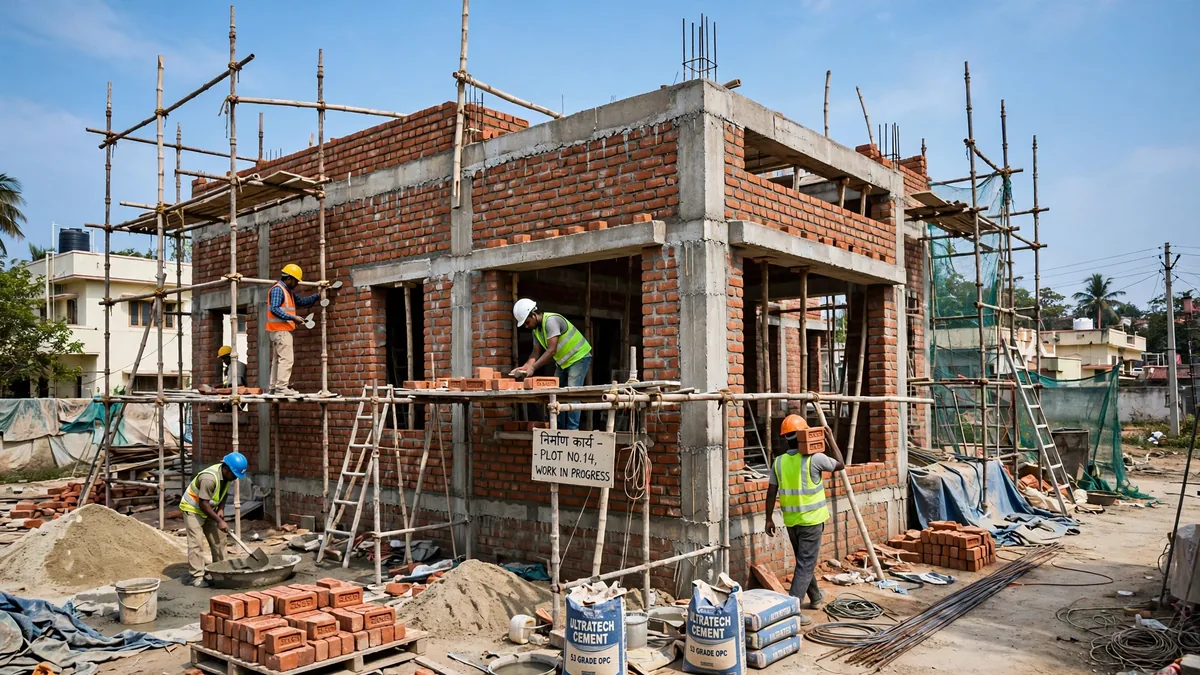
A stage-linked schedule defines each instalment by completed, inspectable work: plinth beam cast, lintel level reached, roof slab cast, brickwork and plaster complete, flooring and finishes done. Each stage must name the work, who certifies it, and the documents that accompany payment.
Avoid the time-linked plan: fixed dates and fixed amounts regardless of progress. By the third date you may have paid for two floors that do not exist. Ask for stage-linked instead. The table shows an illustrative pattern for a Rs 60 lakh house contract.
| Stage | Work complete | Share | Check first |
|---|---|---|---|
| Booking / agreement | Agreement registered | 10% | In hand |
| Plinth | Plinth beam cast | 10% | Engineer-certified |
| Lintel | Structure to lintel level | 15% | As per drawing |
| Roof slab | Slab cast | 15% | Cube test results |
| Brickwork + plaster | Walls and plaster | 20% | Before tiling |
| Flooring + finishes | Flooring and finishes | 20% | Agreed brands |
| Handover | Snag list closed | 10% | After defect-liability period |
RERA's 10% rule — the advance ceiling
For projects covered by the Real Estate (Regulation and Development) Act, 2016, Section 13(1) says: a promoter cannot accept more than 10% of the cost of the apartment, plot or building as an advance payment or application fee without first entering into a written agreement for sale and registering it. The 10% is a ceiling, not a booking amount, and the agreement must state the specifications, the payment schedule, the possession date and the interest each side pays on default.
Asking for 20–25% "to block the unit" before any agreement is a breach. In September 2026 the Maharashtra Real Estate Appellate Tribunal fined a developer Rs 10 lakh and ordered a refund after it had taken about 36% of a flat's price without ever executing an agreement for sale. If you have paid more than 10% and hold no registered agreement, the developer is already in breach: stop paying and take advice. RERA also requires 70% of buyer collections to sit in a separate account, for that project's land and construction only.
As of November 2026, GST on under-construction homes is 5% without input tax credit for non-affordable homes, and 1% for affordable housing (up to Rs 45 lakh, with carpet-area limits). Once the completion or occupancy certificate is issued, there is no GST on the sale itself. The contract should state whether each instalment is inclusive or exclusive of GST. One caution: a one-off house built on your own plot is usually outside RERA's registration net, so the 10% rule does not directly apply — but the principles still do.
4. "Whichever is earlier" and other red-flag clauses
"Whichever is earlier." The most expensive six words in a construction contract. A clause that says an instalment falls due "on completion of the roof slab or 1 March 2027, whichever is earlier" forces you to pay on the date even if the slab is not cast. Strike it: every instalment should fall due on the stage alone.
One-sided delay penalties. Compare the two interest numbers: what you pay if you are late, and what the builder pays if it is late. In Pioneer Urban Land v. Govindan Raghavan (2019) 5 SCC 725, the builder could charge 18% a year for delayed payments but offered only 9% for delayed possession. The Supreme Court held the terms one-sided, unfair and unreasonable — an unfair trade practice under the Consumer Protection Act, 1986. The numbers should be equal.
Vague possession date and an open-ended grace period. "Possession in 24 months, subject to force majeure" is not a date. Name a possession date, define force majeure narrowly, and cap the grace period at a fixed number of days.
Variations payable immediately in cash at site. Variations — extra work beyond the scope — are where budgets quietly double. No variation should be payable unless approved in writing before the work starts, with the rate and quantity stated. A clause that lets the site team charge for extras on the spot is how Rs 60 lakh becomes Rs 75 lakh.
Payments to an individual rather than the firm. If the builder asks you to pay into a personal account, or in cash, stop. Payments should go to the firm's account, by bank transfer, with the stage named. A personal account breaks the audit trail.

5. Retention money and defect liability
Retention money is the simplest protection in the contract, and the one most often missing. A part of each payment — commonly 5% of each running bill — is held back and released only after the defect-liability period ends. The number is not fixed by law; the contract must state it. Without retention, the builder's incentive to return for a leaking toilet is a favour.
The defect-liability period is the window after handover in which the builder fixes defects at their own cost. The contract should state three things: the length of the period, the response time, and what happens if the builder does not respond. For example: defects reported within 12 months attended to within 7 days of written notice, failing which the owner may get the work done and deduct the cost from retention money.
At handover, walk the house with a written snag list and do not sign until the list is recorded in writing. A snag on a signed list is a job the builder has already accepted. Our handover checklist covers the 40 checks before you take the keys.
6. Variations, termination and delay remedies
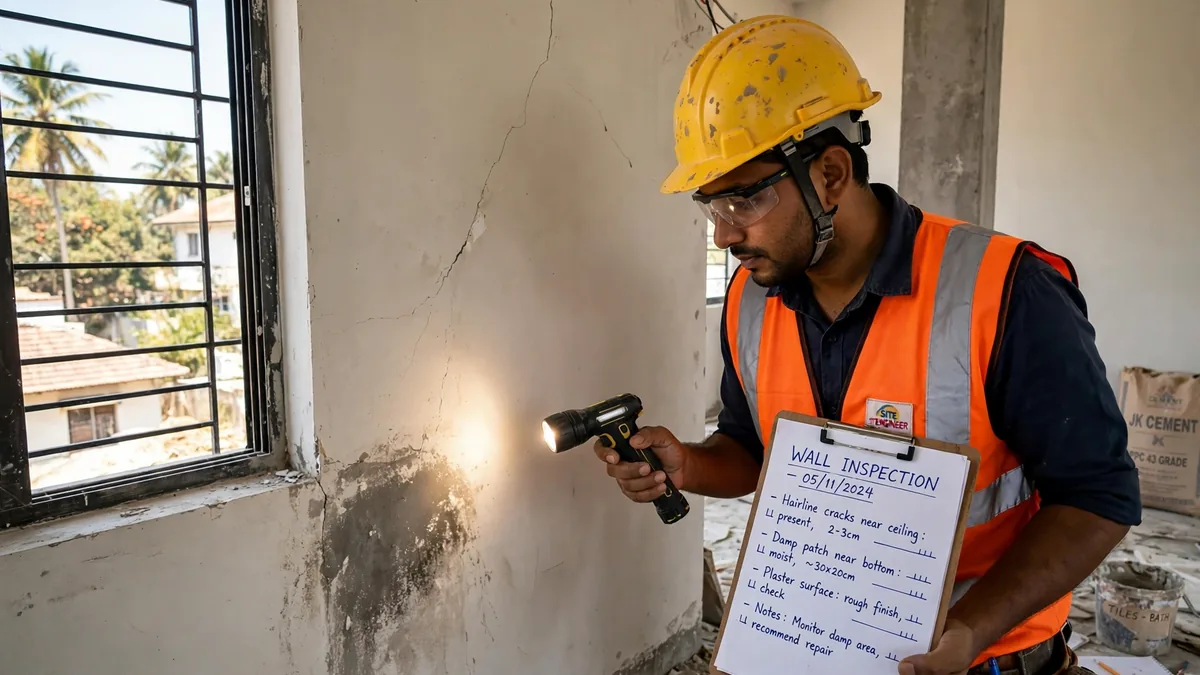
Variations. Changes are normal in a house build — a wall moves, a tile changes. Paying for them without a record is not. Every variation needs a written instruction, a rate agreed before the work starts, and a measurement of the quantity done. Keep a running variation register and check it against every bill; a variation not in the register does not get paid.
Termination. A contract that cannot be ended traps both sides. The termination clause should state three things: written notice, a cure period, and how the work already done is valued if the contract ends. Without a valuation method, the exit becomes a dispute by itself.
Delay remedies. A penalty number alone is a ceiling, not a cheque. The remedy that works is a named weekly sum deducted from the money still held — but only if money is still held: if you have already paid 95% of the price, there is nothing left to deduct from.
7. Before you sign: the ten-point checklist
Run this list against the contract — if any answer is no, it is not ready to sign.
1. Drawings listed by number and revision? Every drawing that defines the house, numbered and dated.
2. Price and exclusions in writing? Total price, inclusions, and exclusions marked.
3. Payments tied to stages, not dates? Every instalment tied to a named stage — no "whichever is earlier".
4. Advance within the law? For a RERA project, no more than 10% before a registered agreement.
5. Completion date and delay remedy with numbers? A named date, a capped grace period, a weekly sum.
6. Quality standards with code numbers? Materials and tests named, not "good standard finish".
7. Retention money and defect liability? A retention percentage, a defect-liability period and a response time.
8. Variations in writing before the work? No variation payable without written approval and an agreed rate.
9. Termination and valuation? Written notice, a cure period and a method for valuing work done.
10. Payments to the firm, by transfer? The firm's bank account named in the contract. No cash, no personal accounts.

A construction contract is not paperwork to get out of the way. It is the real work: the only thing that decides what gets built, when you pay, and what happens when something goes wrong. Read it like a site engineer reads a drawing — line by line. Planning a house in Uttar Pradesh or Delhi NCR? Check the estimate first with our house construction cost guide and building plan approval guide, and talk to the RTPL team before you sign.
Last reviewed: 11 November 2026. All costs and percentages are illustrative figures from web search results, not a quote. This article is general information, not legal advice.