The Journal & Field Notes

Useful thinking
for home builders.

Practical field notes, structural guides, cost estimations, and architectural insights from our active turnkey construction projects in Uttar Pradesh and NCR.

Active Filters: Category: Structural Engineering & Safety ✕ Reset all
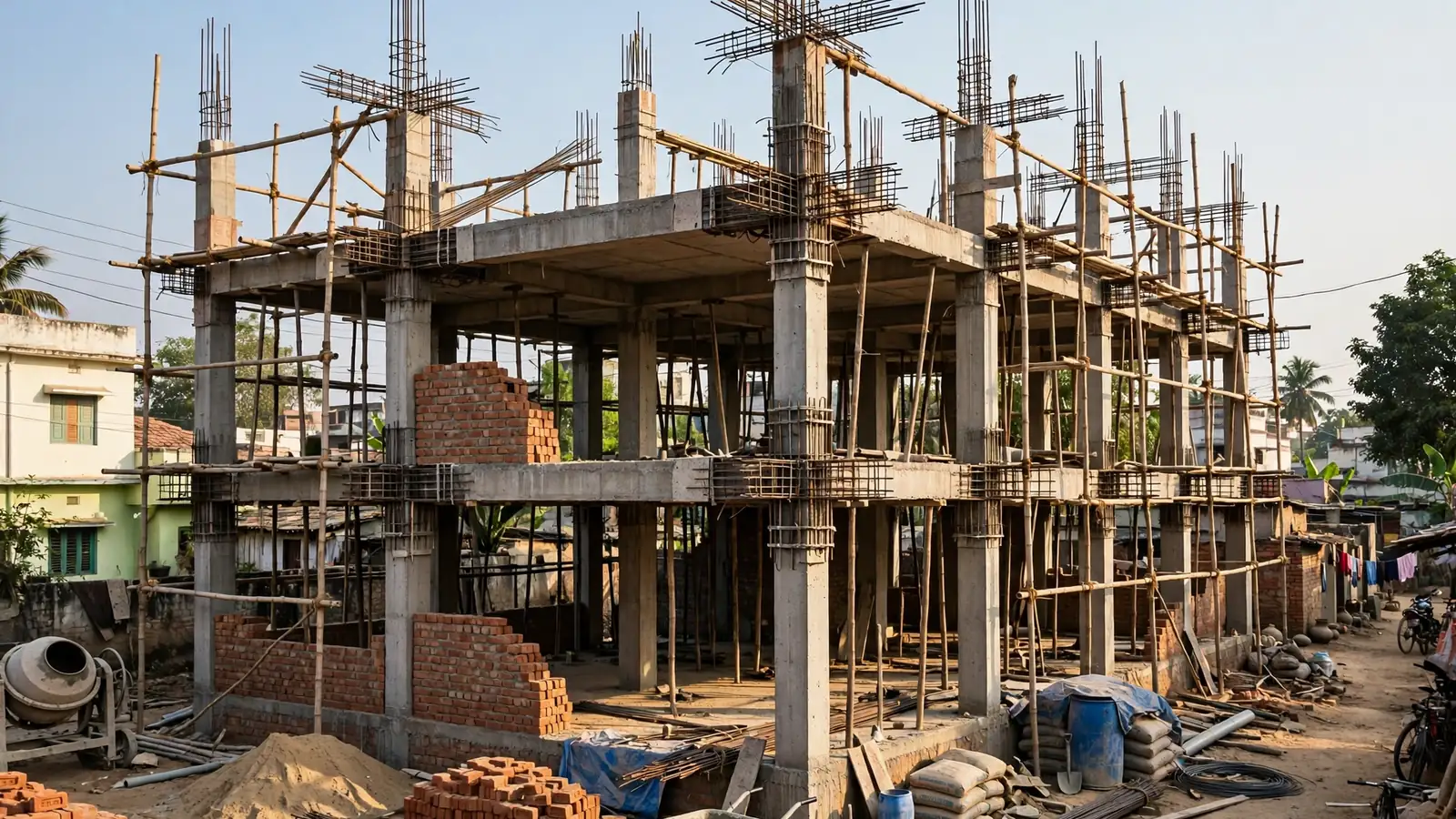
Reinforced concrete column and beam frame of a three-storey house under construction in India, with exposed steel reinforcement at the column-beam joints
Structural Engineering & Safety
Nov 15, 2026 · 10 min · 10 reads

Column and Beam Size for a G+2 House in India: What Your Structural Drawings Mean

A 9-inch column that holds up a single storey can be dangerous under three. Column and beam sizes are not picked from a chart — they follow loads, spans, grades and soil. This guide explains the thumb-rule sizes builders quote, why ground-floor columns are bigger, and how to read the column and beam schedule on your own structural drawing.

Read note
A modern two-storey Indian house with a reinforced concrete frame standing strong on a sunny day
Structural Engineering & Safety
Nov 12, 2026 · 10 min · 10 reads

Earthquake Resistant House Design in India: IS 1893 Basics Every Homeowner Should Know

Most Indian homes are built in seismic zones III, IV or V, yet few homeowners ever ask which zone their plot is in or whether their drawings follow IS 1893 and IS 13920. This guide explains the zones, the zone factors, ductile detailing and the five shapes that fail first — in plain language, with the checks to run before and during construction.

Read note
Cutaway illustration of a raft foundation under a two-storey Indian house, showing the thick reinforced concrete slab covering the whole footprint with columns rising from it
Structural Engineering & Safety
Nov 09, 2026 · 10 min · 23 reads

Raft Foundation vs Isolated Footing in India: Which Suits Your Soil?

A foundation is not chosen from a catalogue — it is chosen from your soil report. Isolated footings are the cheapest, simplest option on firm ground, and a raft is the right answer when the soil is weak, variable, or expansive. This guide compares both on bearing capacity, cost, settlement and construction, so you can check your contractor's recommendation instead of accepting it blind.

Read note