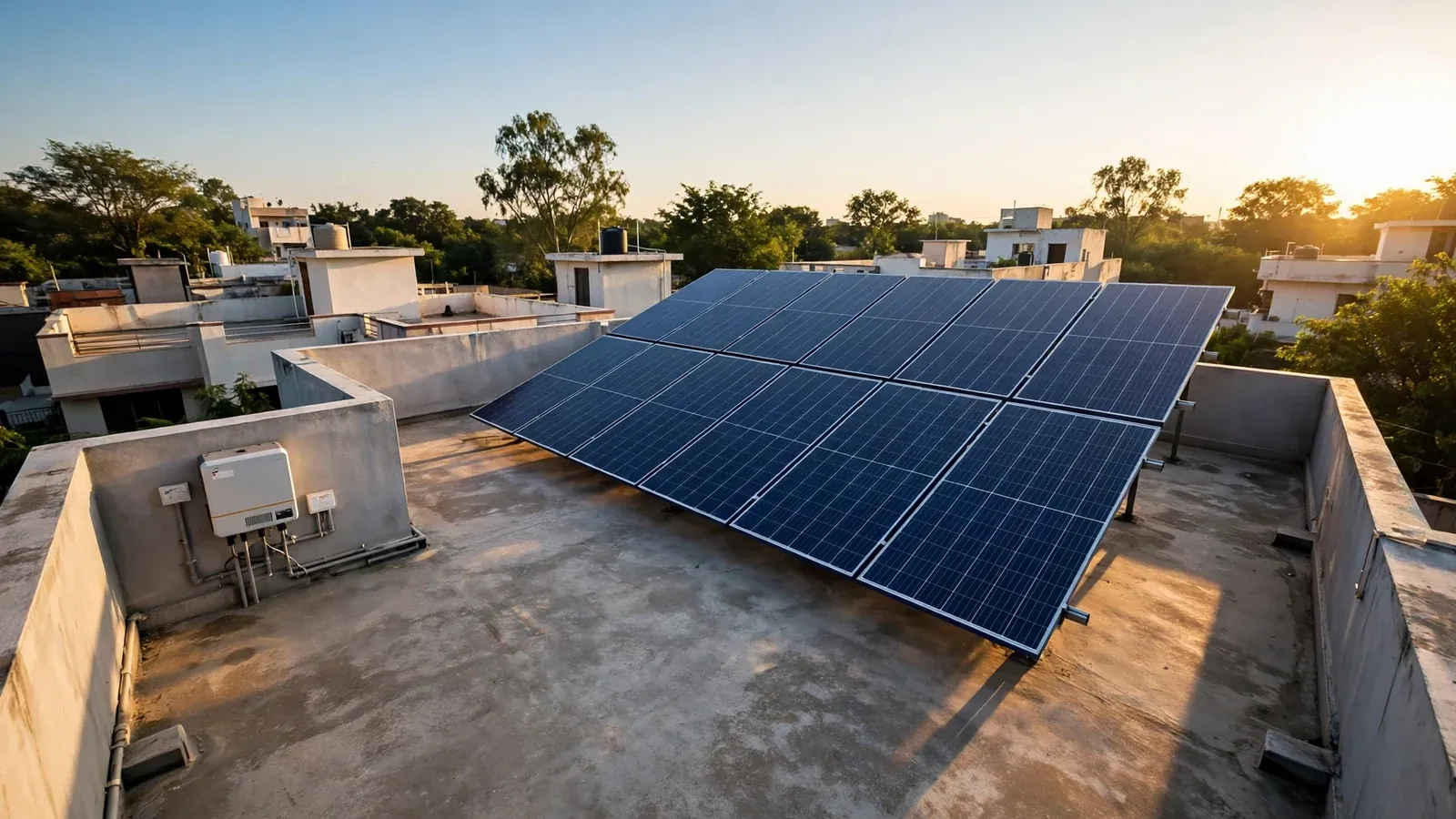
The average Indian home pays for electricity every month for decades — and the roof above it does nothing. A rooftop solar system changes that arithmetic: the government pays up to Rs 78,000 of the cost through the PM Surya Ghar subsidy, the panels generate power for about 25 years, and a well-sized system can cut the monthly bill by 70 to 100%. This guide covers the subsidy, system costs by size, sizing from your bill, net metering, the honest payback range, and the application process.
1. The short answer
For most Indian homes the right system is 3 kW. It costs roughly Rs 1.65 to 1.90 lakh before subsidy and about Rs 87,000 to 1.12 lakh after the Rs 78,000 subsidy — the maximum the scheme pays, so a bigger system earns no more. A 3 kW system generates roughly 360 to 390 units a month, covering a typical household using 250 units, with surplus to export. The honest payback is 2.5 to 5 years, depending on your tariff and daytime usage; after that, the electricity is largely free apart from cleaning and one inverter replacement. One warning: PM Surya Ghar covers rooftop solar power, not solar water heaters. Our comparison of a solar water heater vs electric geyser explains that product separately.
2. The subsidy: PM Surya Ghar pays up to Rs 78,000
PM Surya Ghar: Muft Bijli Yojana launched in February 2024, with an outlay of Rs 75,021 crore and a target of one crore homes by 2026–27. The subsidy is fixed: 1 kW earns Rs 30,000, 2 kW earns Rs 60,000, and 3 kW or above earns Rs 78,000 flat — the third kilowatt adds only Rs 18,000, and the amount is capped at Rs 78,000 even for 5 kW or 10 kW. It is paid as Central Financial Assistance by DBT to your bank account, after the discom inspects the installation and commissions the net meter. Apply on pmsuryaghar.gov.in; some states add their own top-up, so check with your local discom.
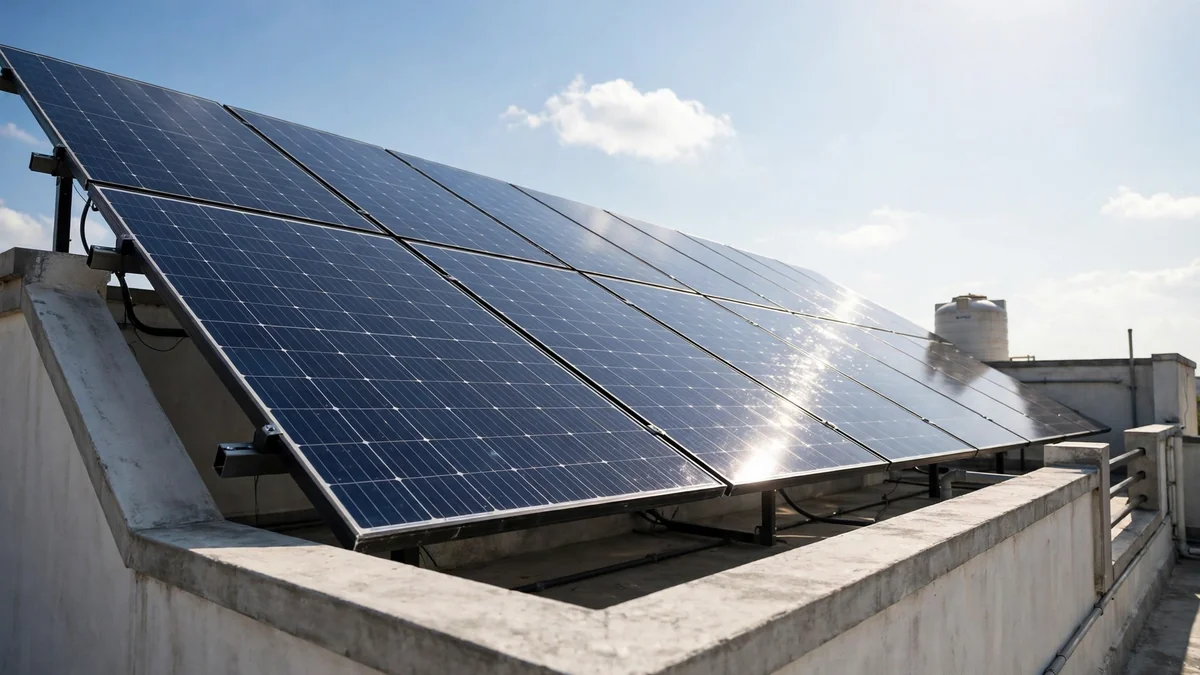
Two conditions decide whether you get the money. First, the panels must be DCR — domestic content requirement — meaning the cells are made in India. A cheaper imported panel may look identical on the roof but does not qualify. Second, the installation must be done by an MNRE-approved installer registered on the portal. Ask for both in writing — the DCR certificate and the installer's registration number — before you pay any advance.
3. What a system costs in 2026 — after the subsidy
Costs vary by city, brand, panel type and roof condition — treat every figure here as an illustrative range from the current guides, not a quotation. Before subsidy, rooftop solar costs roughly Rs 50,000 to 70,000 per kW installed. After the subsidy, small systems change a lot and large ones less, because the subsidy is capped.
| System size | Gross cost (before subsidy) | Subsidy | Net cost (after subsidy) | Rough monthly generation |
|---|---|---|---|---|
| 1 kW | Rs 55,000–75,000 | Rs 30,000 | ~Rs 25,000–45,000 | 120–165 units |
| 2 kW | Rs 1.10–1.42 lakh | Rs 60,000 | ~Rs 50,000–82,000 | 240–330 units |
| 3 kW | Rs 1.65–1.90 lakh | Rs 78,000 | ~Rs 87,000–1.12 lakh | 360–390 units |
| 5 kW | ~Rs 3 lakh | Rs 78,000 (capped) | ~Rs 2.22 lakh | 600–825 units |
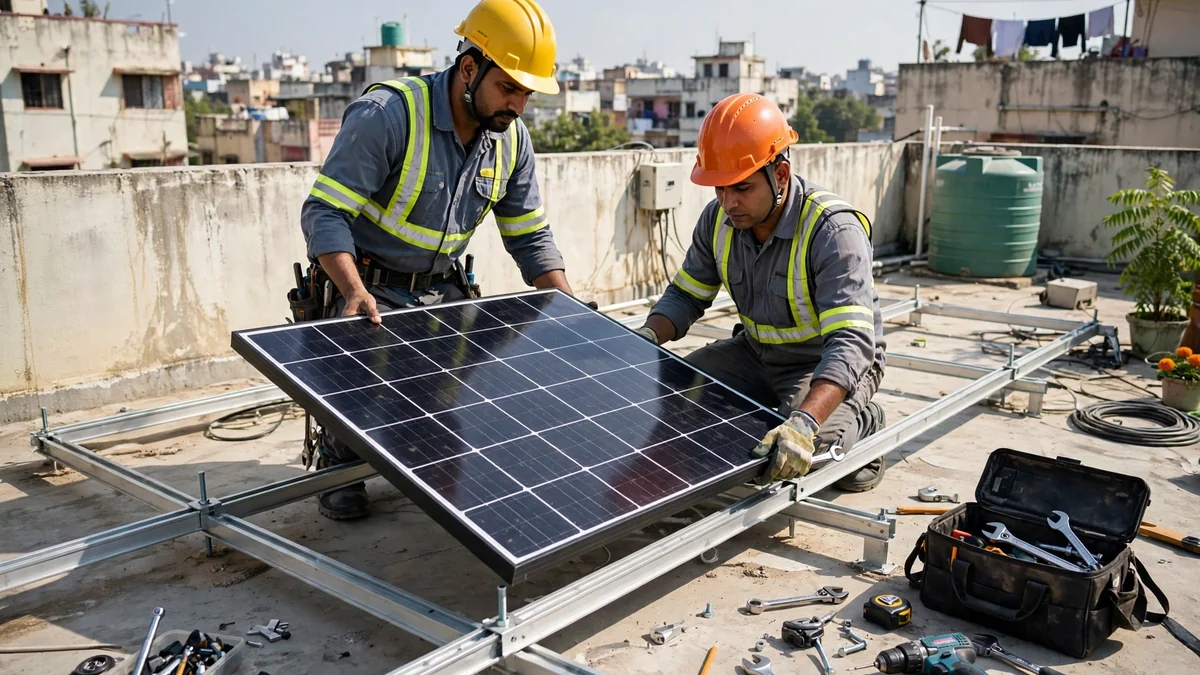
Three things hide inside the headline price. The structure — the galvanised mounting frame, rails and civil work — varies with roof type: a flat concrete roof is straightforward, a sloped or asbestos roof is not. The inverter is the second cost centre and the one that will need replacing (Section 9). Wiring, earthing and net-meter charges are sometimes quoted separately, so ask for an itemised quotation with each item as its own line. Two quotations Rs 20,000 apart are often the same price once the missing items are added back — compare itemised BOQs, not headline rates.
4. What size does your home need? Start from the bill
Do not size a solar system from the number of rooms, or from what the neighbour installed. Size it from the electricity bill: monthly units divided by 30 gives daily units; divide that by the peak sun hours for your city — roughly 4 to 5 hours for most of India. Up to 150 units a month needs about 1 to 2 kW; 150 to 300 units needs 2 to 3 kW; above 300 units needs above 3 kW. Most Indian homes land at 3 to 5 kW. Use the average of the last twelve months, not the summer peak — a system sized for June is oversized for the other nine months, and surplus export earns far less per unit than power you use yourself.
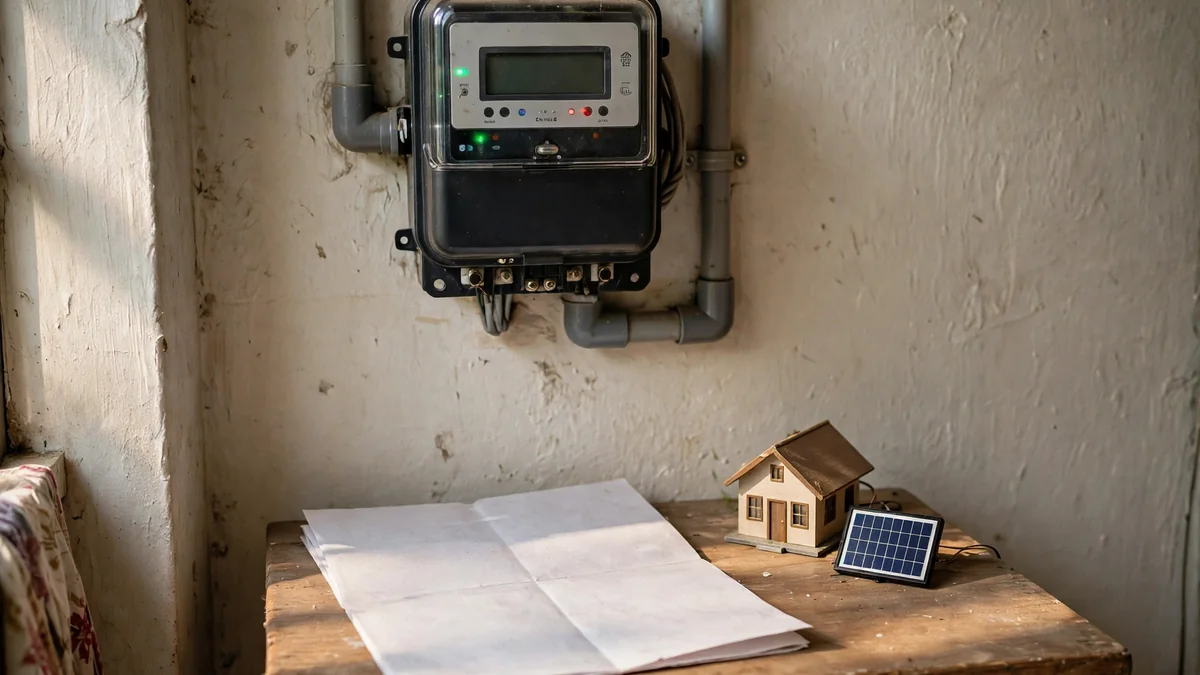
Roof space is the other constraint — measure it before you pay. One kW needs roughly 80 to 100 sq ft of clear, shade-free roof, so 3 kW needs about 250 to 300 sq ft. Walk the roof at 10 in the morning and again at 3 in the afternoon: a water tank, a neighbour's wall, a tree or a staircase headroom can shade a corner that looked clear at noon, and partial shade on one panel drags down the whole string unless the installer uses optimisers or micro-inverters. Our guide on house wiring in India explains earthing and load planning for the inverter connection.
5. How much power it makes — and how net metering cuts the bill
One kW of rooftop solar in India generates roughly 120 to 165 units a month — about 4.3 units a day in Delhi, depending on city, season and panel cleanliness. A 2 kW system makes about 240 to 330 units a month, and a 3 kW system about 360 to 390. Against a home using 250 units a month at roughly Rs 7 a unit, the 3 kW system covers the whole consumption and exports the surplus, saving roughly Rs 1,750 a month. The guides put the bill reduction at 70 to 100% for a well-sized system.
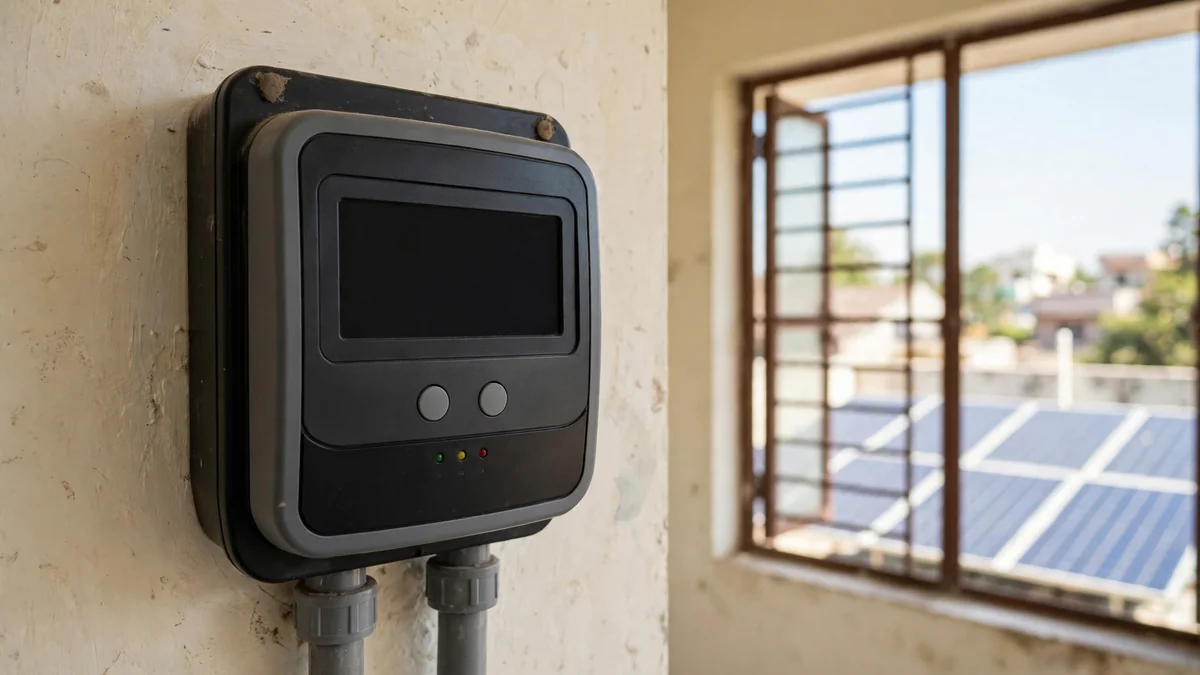
Net metering makes this work. The discom fits a bidirectional meter recording both the power you draw and the surplus you export; your bill is for the difference. At midday the surplus is credited; at night you draw from the grid. Export is typically credited lower than the import tariff — one Delhi calculator uses Rs 3.50 per exported unit against a Rs 7 import tariff — so self-consumption matters: power used while the sun shines is worth the full tariff, exported power roughly half. Shift the washing machine, water pump and geyser to daytime — the cheapest habit a solar home can adopt.
6. On-grid, off-grid or hybrid?
Three system types exist, and the wrong choice is the most expensive mistake here. An on-grid system connects to the discom's network, uses net metering, and has no batteries. It is the cheapest option, the one the PM Surya Ghar subsidy supports, and the right choice for most urban homes. Its one limitation: it shuts down during a power cut, so the panels cannot feed power into a line a lineman is repairing. An off-grid system has batteries and works without the grid, but the batteries add a large cost and need replacing every few years.
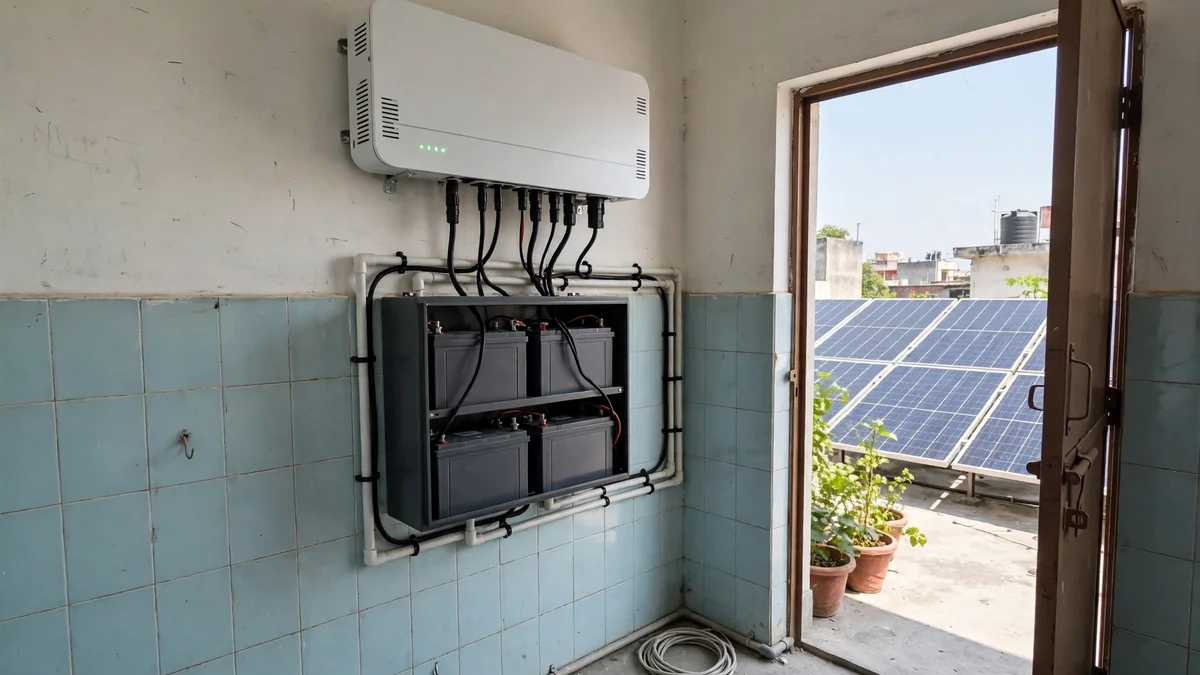
A hybrid sits between the two: grid-connected, with a battery for essential loads during cuts. It suits homes where cuts are frequent enough to matter but the grid is otherwise reliable. The rule is simple: stable power and a lower bill as the goal means on-grid. Long, frequent cuts and a need for fans, lights and a fridge through them means pricing a hybrid.
7. Payback: the honest range is 2.5 to 5 years
Every solar advertisement quotes a payback period, and no two agree — the answer depends on assumptions the advertisement does not print. Guides assuming a Rs 8 tariff and high self-consumption arrive at 2.5 to 3.2 years. A Delhi calculator using a Rs 7 tariff and a Rs 3.50 export buyback arrives at about 4.5 to 5 years. Both can be right for their own assumptions, so this guide gives a range: roughly 2.5 to 5 years for a typical 3 kW system after subsidy — the subsidy is certain, the payback depends on your tariff, daytime usage and export rate.
Run the arithmetic on your own numbers before you sign. Net cost after subsidy — say Rs 1 lakh for 3 kW — divided by the expected monthly saving of about Rs 1,750 gives roughly 57 months, or 4.75 years. After payback, the power is largely free for the remaining 20 years of the panels' life, apart from cleaning and one inverter replacement. That is the real return: twenty years of near-free electricity once the system has paid for itself.
8. How to apply: the process, step by step
The process takes 30 to 45 days from application to activation, and most of it is paperwork the installer handles. Step one: register on pmsuryaghar.gov.in with your electricity consumer number, discom and bank details, and apply for rooftop solar. Step two: the discom checks feasibility — connection, sanctioned load and roof — and issues an approval. Step three: the MNRE-approved installer fits the system with DCR panels and submits the installation details on the portal.
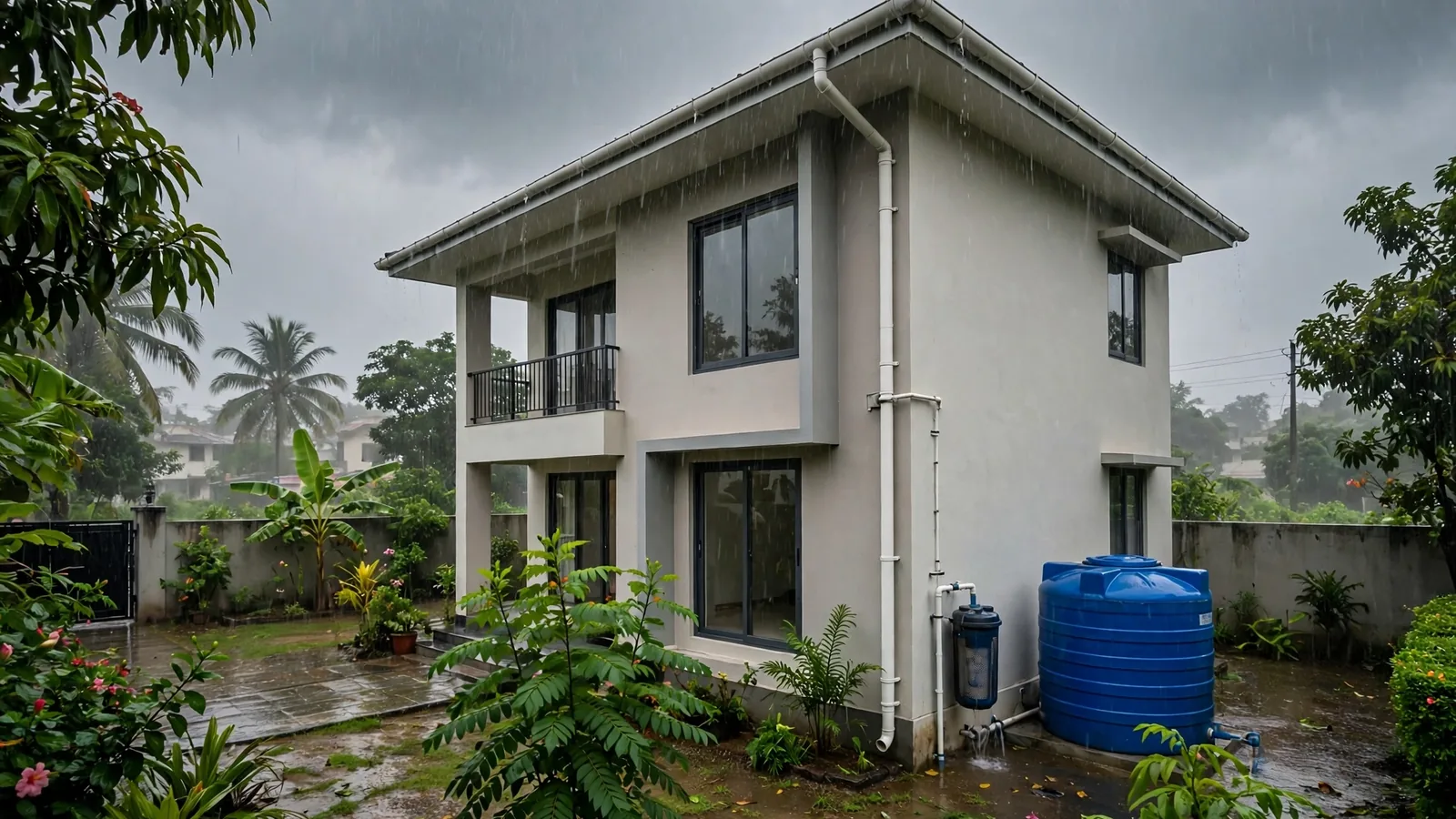
Step four releases the money: the discom inspects the installation, checks panels and inverter against the approved specification, and commissions the net meter. Only after that does the subsidy move. Step five: up to Rs 78,000 is credited by DBT to your registered bank account. Keep the application number and every portal acknowledgement, and track the status yourself. A cool roof cuts the cooling load the panels must cover, and our guide on rainwater harvesting for Indian homes covers the other roof-level system that pairs well with panels.
9. Maintenance and what breaks over 25 years
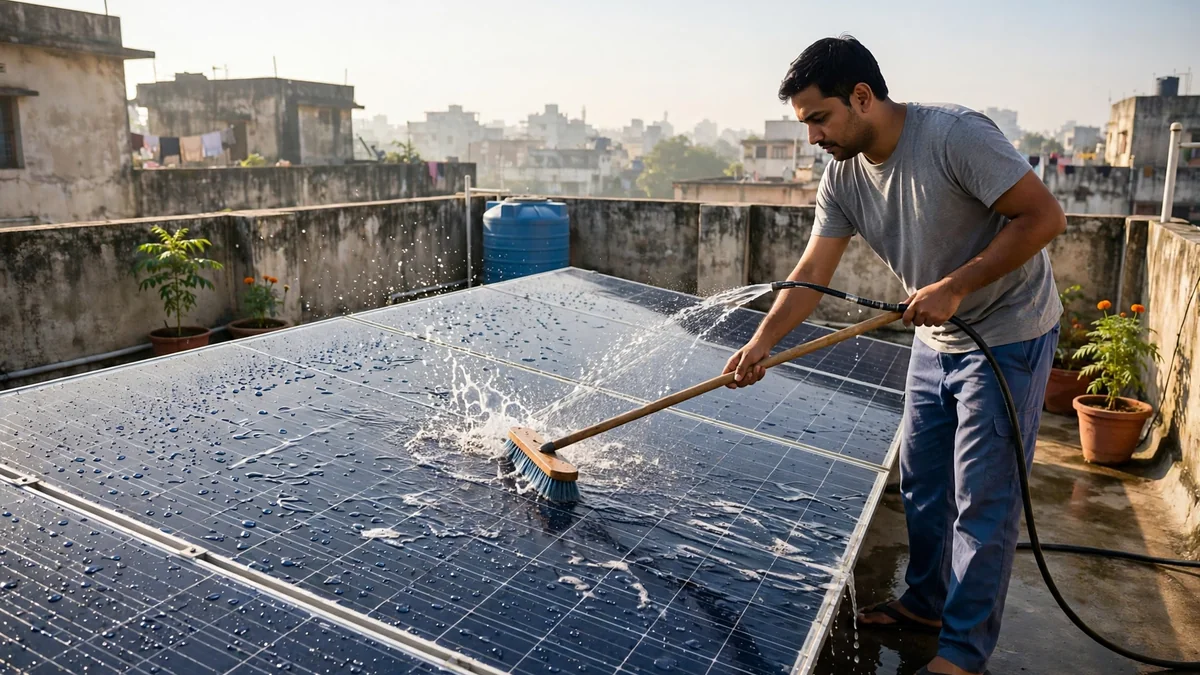
Solar panels are low-maintenance, not no-maintenance. They carry a performance warranty of about 25 years, but that assumes they are kept clean and undamaged. Dust, bird droppings and pollution film cut generation noticeably in Indian cities, so clean the panels with a soft brush and plain water every two to four weeks — never a harsh chemical or a hard scrub that scratches the glass. Clean early in the morning, when the panels are cool.
The inverter is the part that will fail first. A string inverter typically lasts 10 to 12 years, so budget for one replacement during the panels' 25-year life — the single largest maintenance cost in the system, and quotations that ignore it understate the lifetime cost. Check the mounting structure after every monsoon: loose bolts, rust at joints, water pooling around roof penetrations. And do any waterproofing before installation, not after — removing and refitting panels to fix a leak is expensive.
10. Before you sign: five checks that protect your money
First, the installer: MNRE-approved, with the registration number in the quotation. Second, the panels: DCR-certified, with the certificate and serial numbers in writing — without DCR there is no subsidy. Third, the quotation: itemised, with the subsidy shown as its own line rather than quietly absorbed into the price. Fourth, the roof: checked for shade at two times of day, with the system sized to twelve months of bills, not the summer peak. Fifth, the paperwork: the application in your name, the discom feasibility approval, and net-meter commissioning before the final payment — hold back 10% until the meter is commissioned.
Rooftop solar is one of the few home investments where the government pays a fixed share of the cost and the return shows in your own monthly bill. Size it from the bill, claim the Rs 78,000 subsidy at 3 kW, use DCR panels and an approved installer, and treat the payback as a range, not a promise. For a measured check on your own roof — shade, structure and the right system size — talk to RTPL with twelve months of electricity bills and the roof dimensions.